Author: Khandakar Ohida

  • An Archive of Remains

    An Archive of Remains

    Expanded cinema installation, 2025
    Jan Van Eyck Academie Open Studio, Maastricht

    Short film (24 min), colour, sound — light animation (4 min 30 sec), sound art, programming, and found objects. Dimensions variable.

    All objects in the installation were collected by Ohida from the Netherlands and the UAE during her residency at Jan Van Eyck Academie. The film traces the act of collecting as a form of archiving — gathering objects overlooked or discarded within the artist’s immediate environment and drawing them into dialogue with her long-running Museum on the Moon research project developed with her uncle, Khandakar Selim, in rural West Bengal.

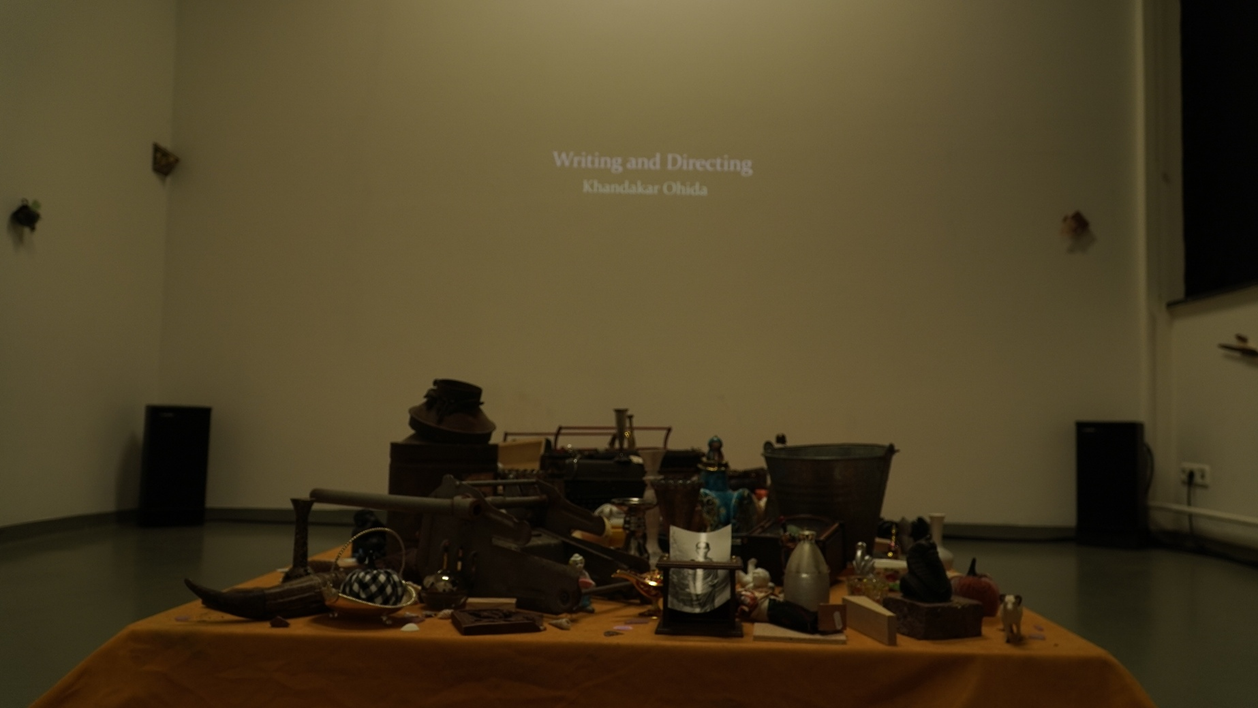
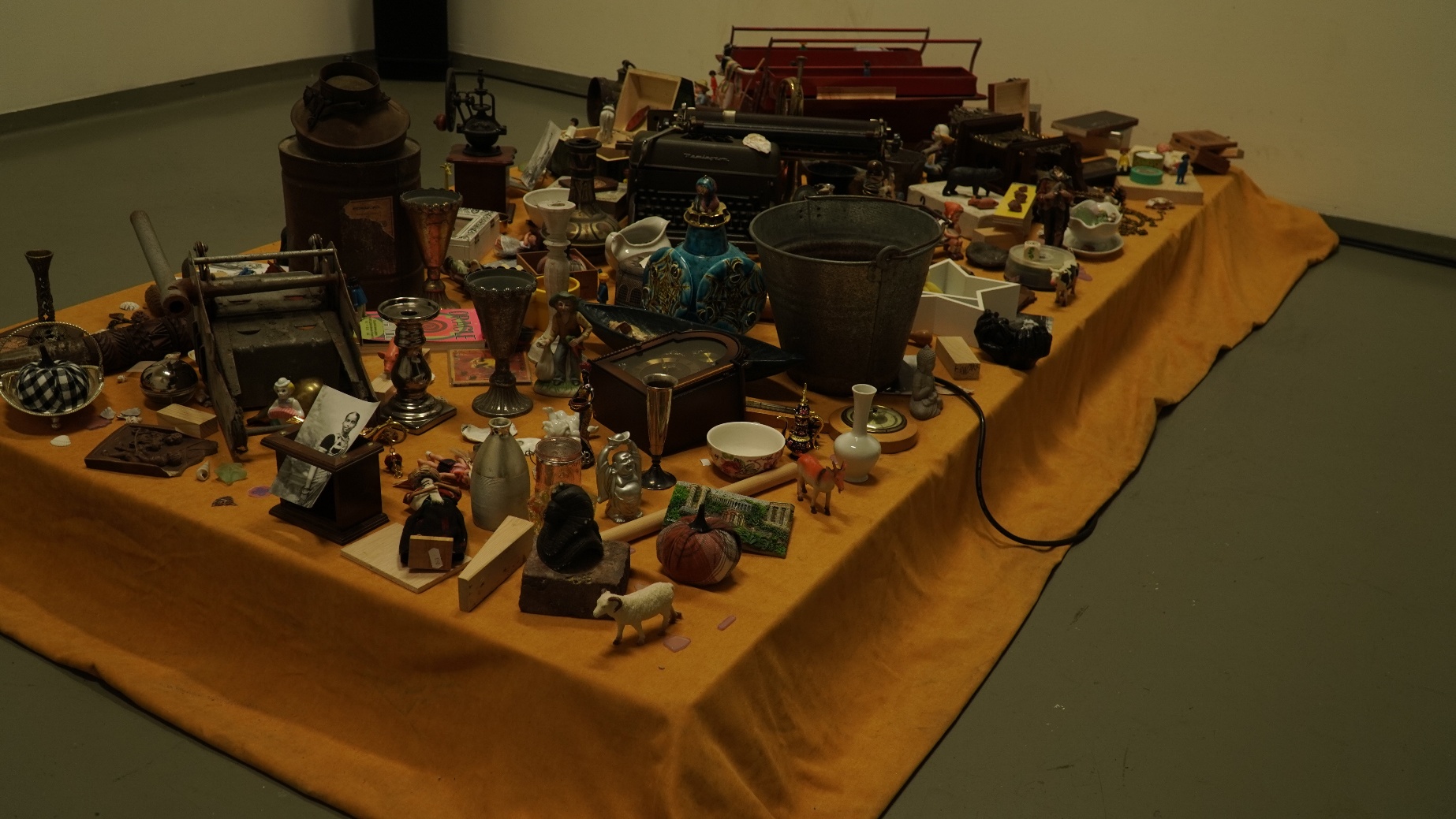
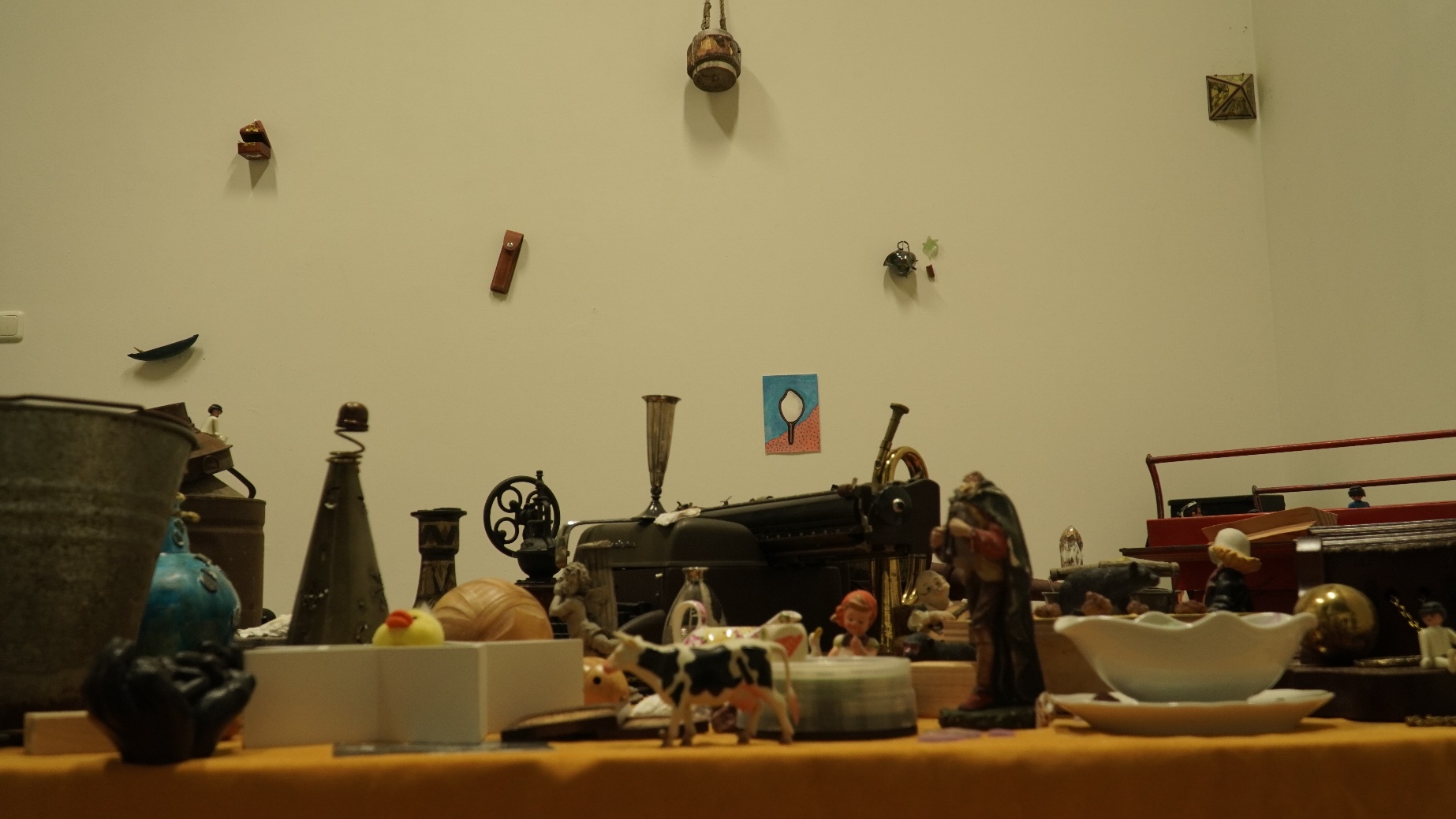
    In the installation, collected objects are arranged on an orange-draped table and pinned directly to the gallery wall. The wall-mounted pieces double as elements in the light animation, which activates after the film completes — the same objects that appear as documentary subjects in the film becoming animated presences in the space.

    Film
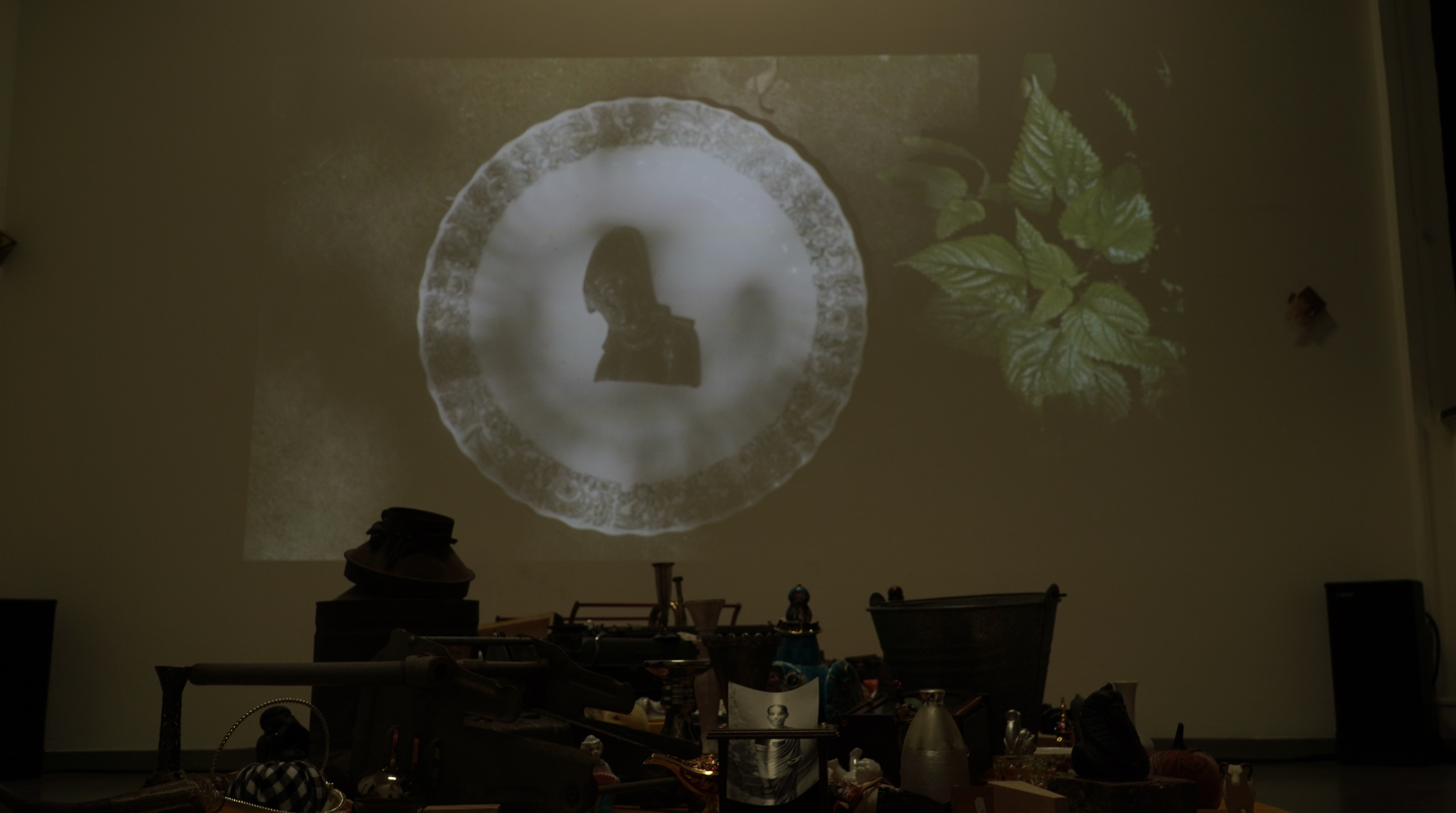
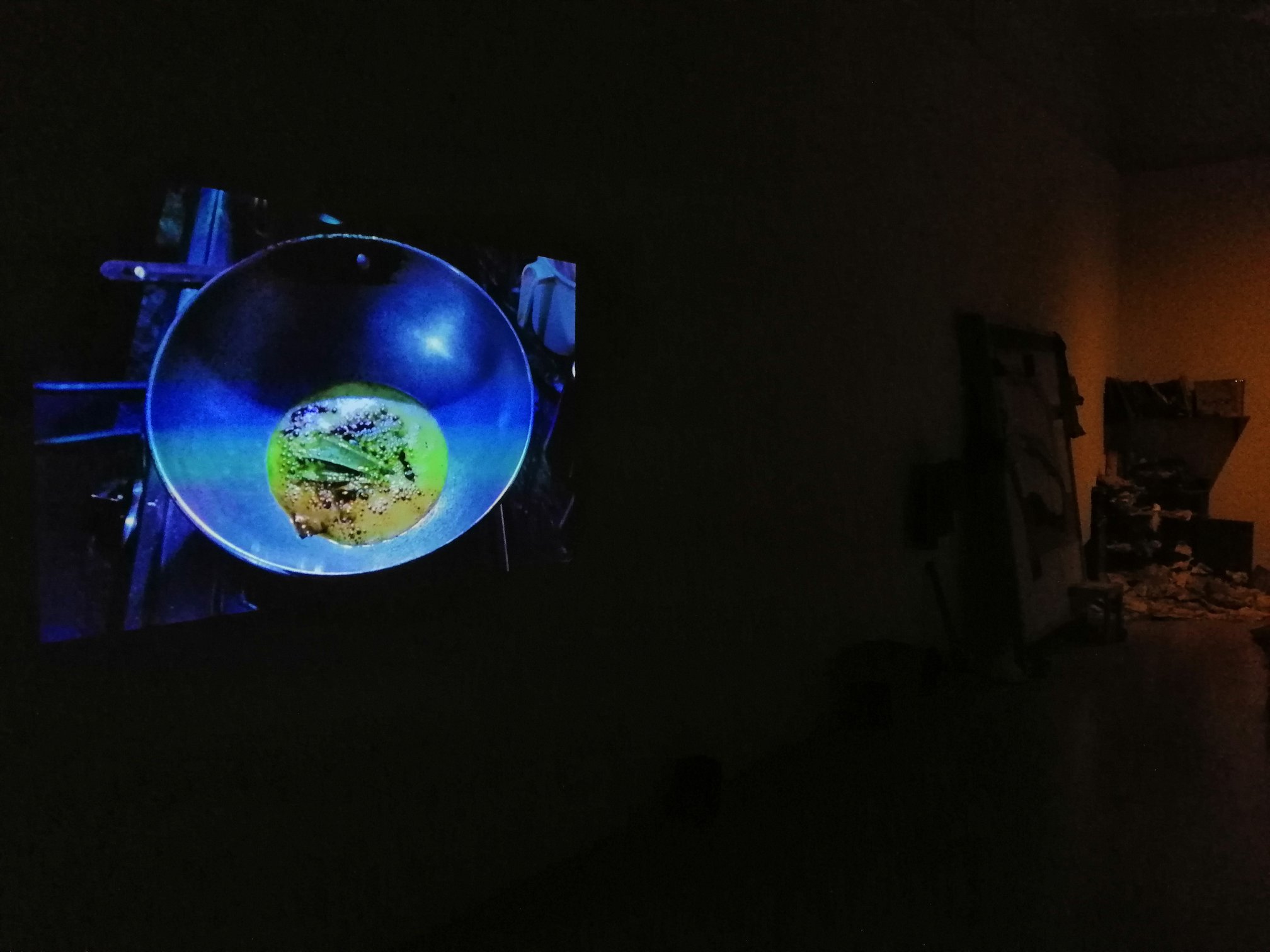
    Film projection on the wall at Jan Van Eyck Academie — a silhouetted figure appears inside a projected decorative plate, alongside botanical imagery, above the table of collected objects below.
    Film projection on the wall, Jan Van Eyck Academie Open Studio, 2025

    Film Stills

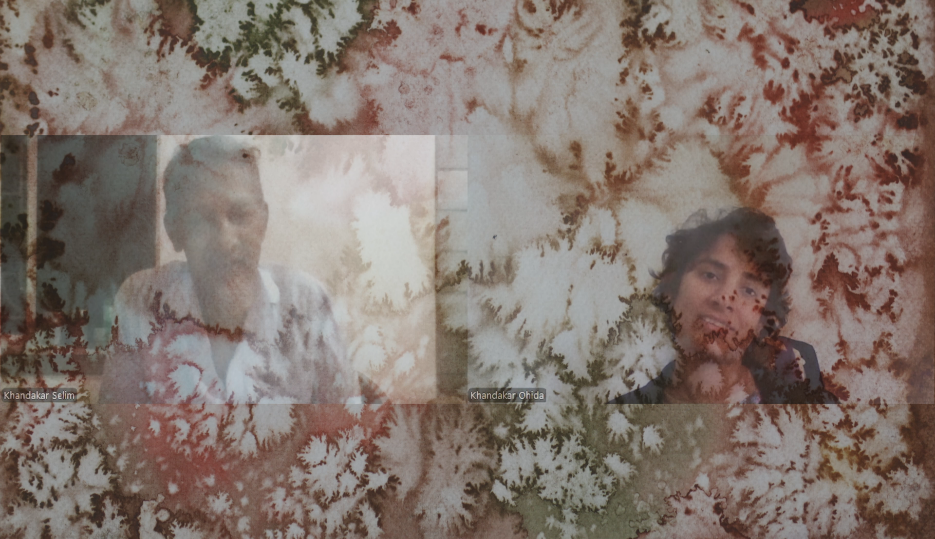
    Film still — a video call between Khandakar Selim (India) and Khandakar Ohida (Netherlands) overlaid on a rich botanical textile background, visualizing the transnational dialogue at the heart of the work.
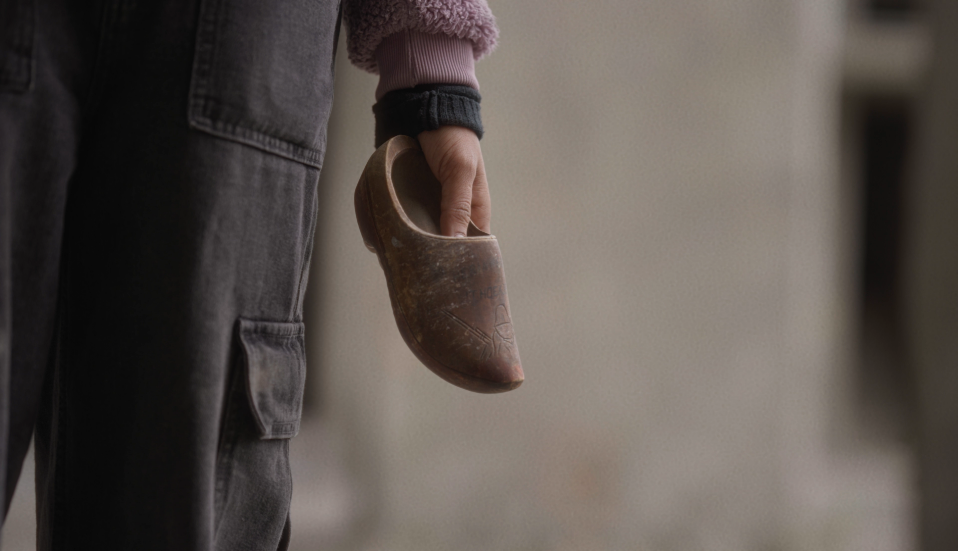
    Film still — a hand holding a Dutch wooden clog, one of the collected objects gathered from the Netherlands for the archive.
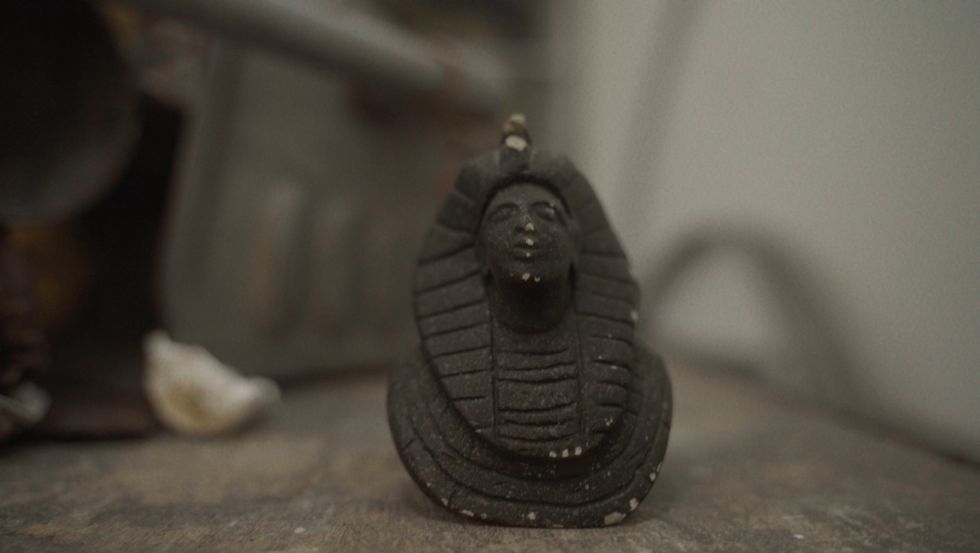
    Film still — a small Egyptian pharaoh figurine resting on a surface, among the eclectic found objects collected across the Netherlands.
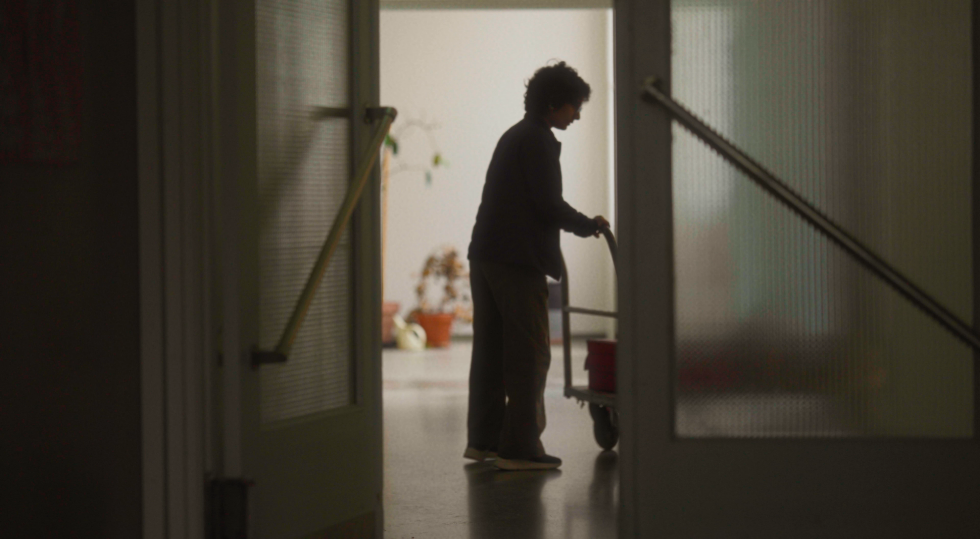
    Film still — an elderly figure silhouetted in a doorway, evoking themes of thresholds, memory, and the passage of time.
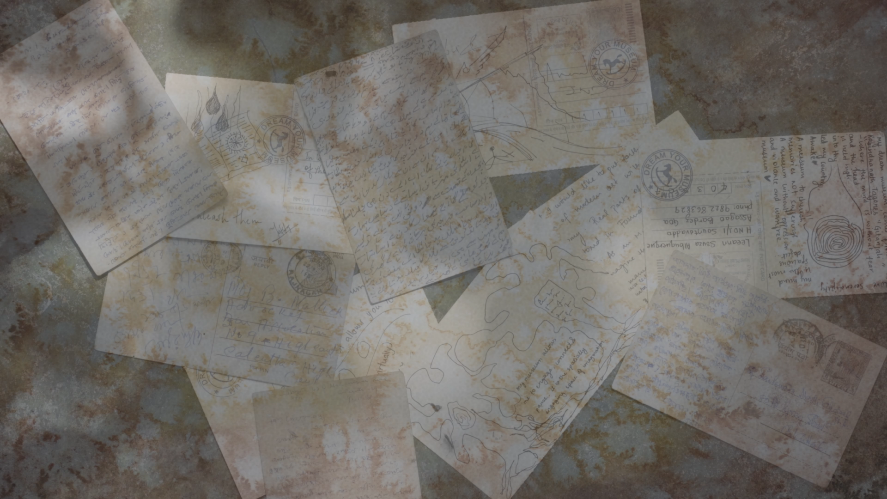
    Film still — scattered handwritten documents and papers spread across a surface, fragments of personal and institutional record-keeping.

    Installation

    Installation view — the full exhibition space at Jan Van Eyck Academie, with the collected objects arranged on a draped table and the film's opening credits projected on the wall behind.
    Installation view with film projection, Jan Van Eyck Academie Open Studio, 2025
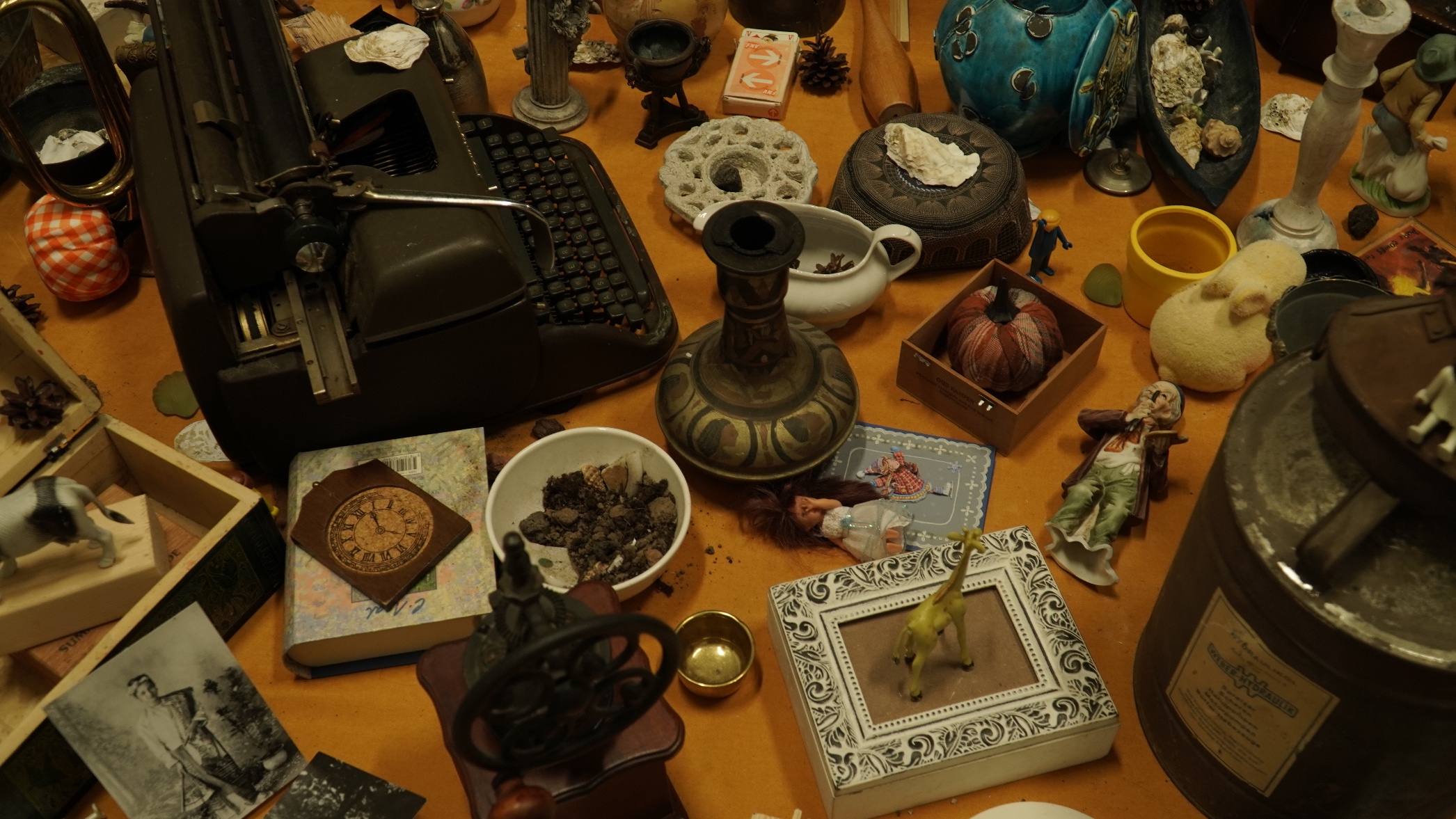
    Objects installation — a wide overhead view of the full collection of found objects arranged on an orange-draped table at Jan Van Eyck Academie, gathered from the Netherlands and UAE.
    Objects installation — a mid-range view of the collection showing diverse objects on the table alongside smaller items pinned directly to the gallery wall above, used for the light animation.
    Detail of collected objects — a close-up of the table's surface revealing a typewriter, ornate vases, a clock face, ceramic figurines, a toy cow, and other gathered materials.
    Details of collected objects

    Light Animation

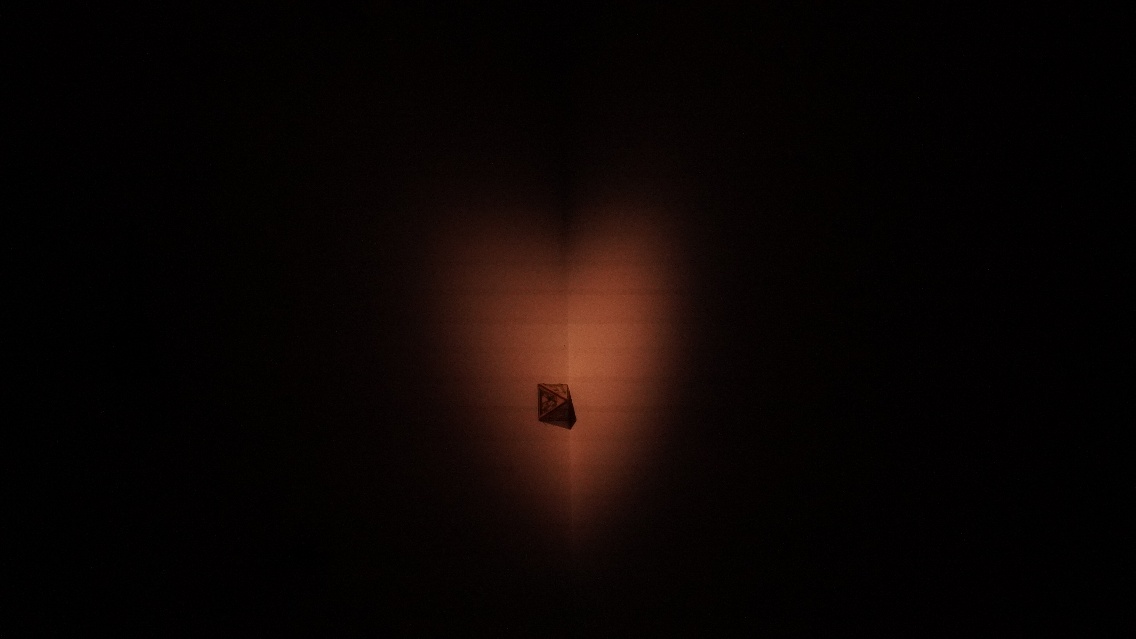
    Light animation with sound, 4 min 30 sec. Wall-mounted objects, programming. The animation begins after the film ends, activating the same objects that appear throughout the film.
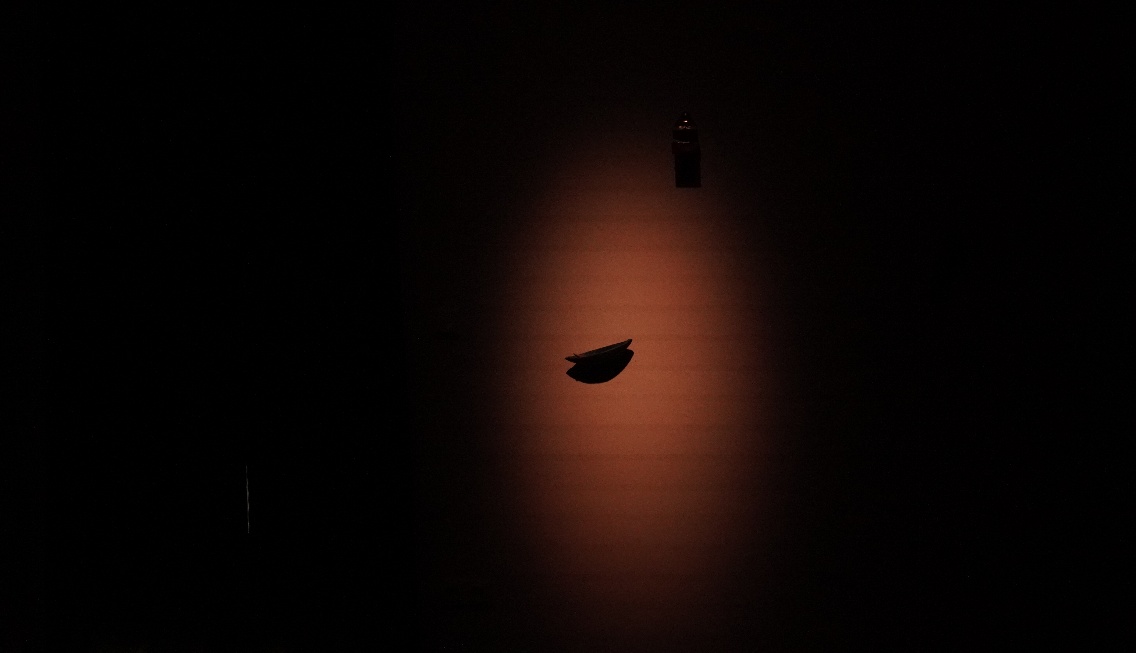
    Light animation still — a single dark boat-like object mounted on a wall, illuminated by a concentrated warm orange glow in an otherwise black space.
    Light animation still — a small diamond-shaped object in the corner of two walls, lit by a warm amber light radiating from the meeting point of the surfaces.

    Related works

    Where Dust Remembers — video installation shown at the same Jan Van Eyck Academie open studio, 2025.

    Museum on the Moon — the feature-length documentary film at the heart of this research project.
  • Where Dust Remembers

    Where Dust Remembers

    Video installation, 2025
    Jan Van Eyck Academie Open Studio, Maastricht

    Short video (10 min), colour, sound, objects, interactive station.

    Where Dust Remembers is a short film developed specially for the Jan Van Eyck Academie open studio from Ohida’s feature-length documentary project Museum on the Moon. It centres on her uncle Khandakar Selim’s lifelong collecting practice and the demolition of his mud house in Kelepara village, West Bengal — originating from an observation of the everyday decay of objects within spaces where imagination and aspiration are tightly regulated.

    The work poses a central question: how much are we permitted to dream? It functions as a metaphorical site — one imagined as existing beyond conflict, social exclusion, and natural calamity. Over six years, Ohida documented and cared for nearly 12,000 unclassified objects collected by Selim, a lower-middle-class rural Muslim man, developing an urgency to interrogate the foundational expectations of the museum — and to question who is granted the legitimacy to create one.

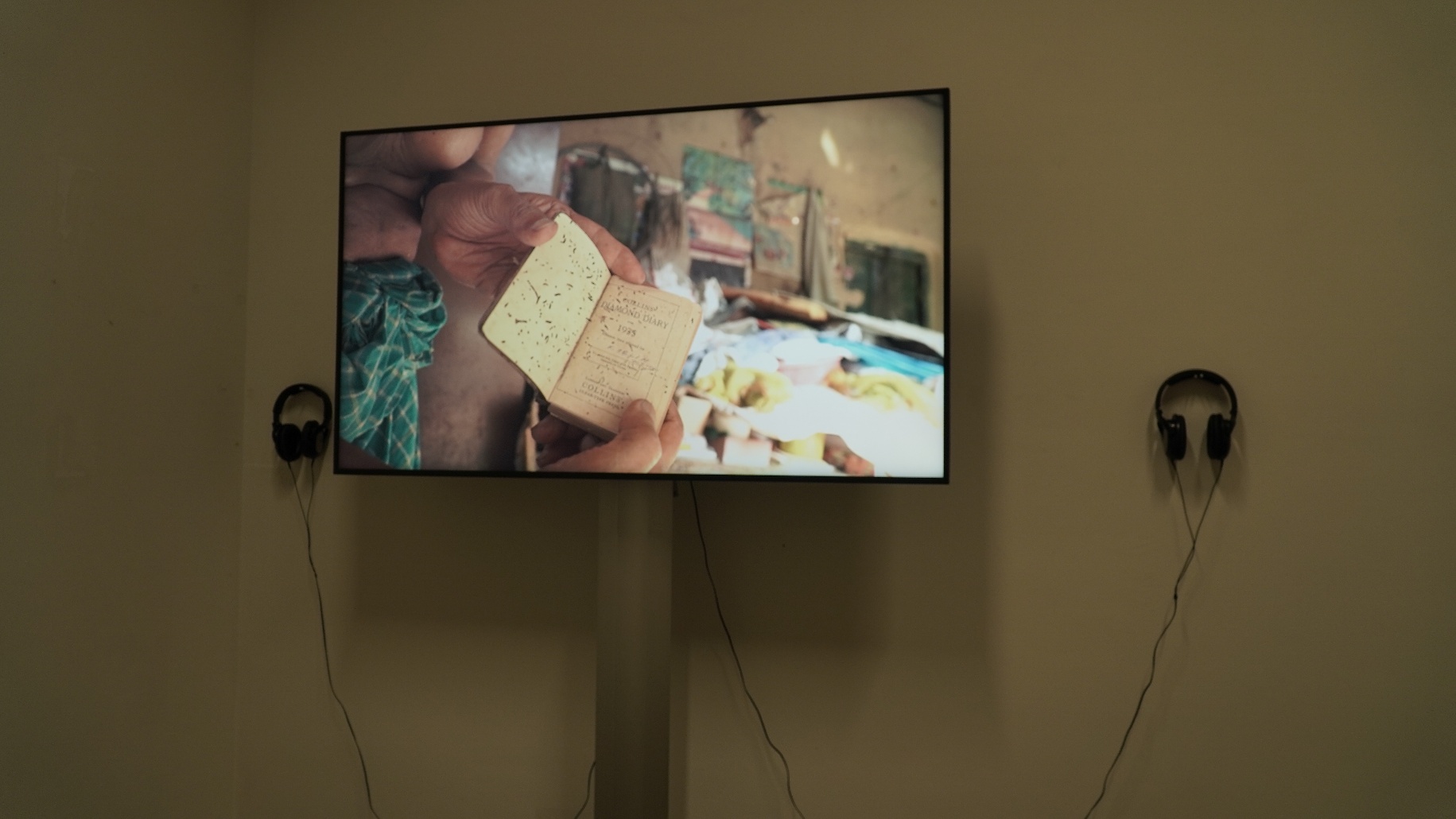
    Exhibition view — a wall-mounted monitor showing a film still of hands carefully holding a small worn notebook, with headphones on either side for intimate viewing at Jan Van Eyck Academie.
    Display view, Jan Van Eyck Academie Open Studio, 2025

    Film Stills

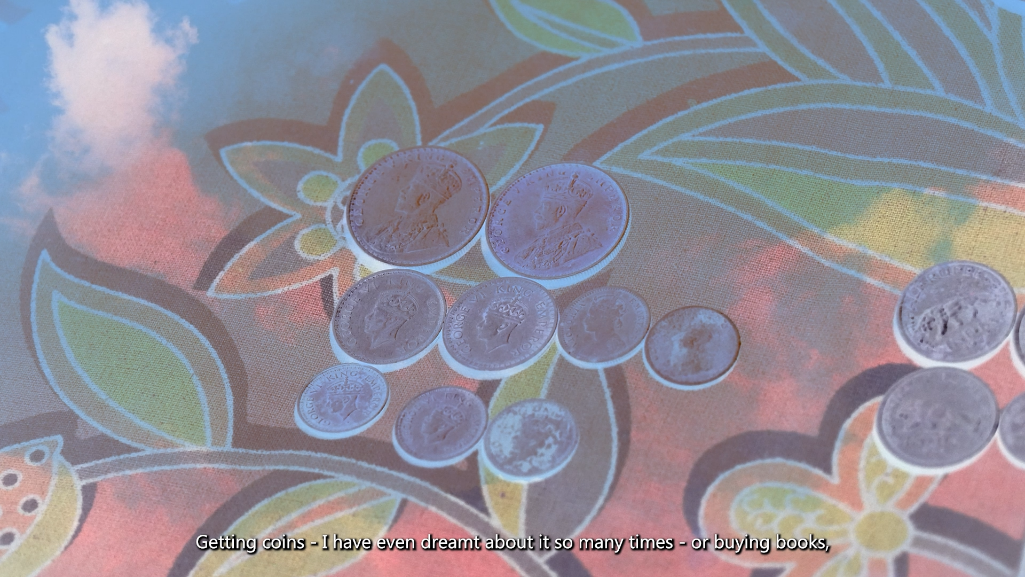
    Film still — a cluster of old coins arranged on a colorfully painted decorative surface. Subtitle reads: 'Getting coins — I have even dreamt about it so many times — or buying books.'
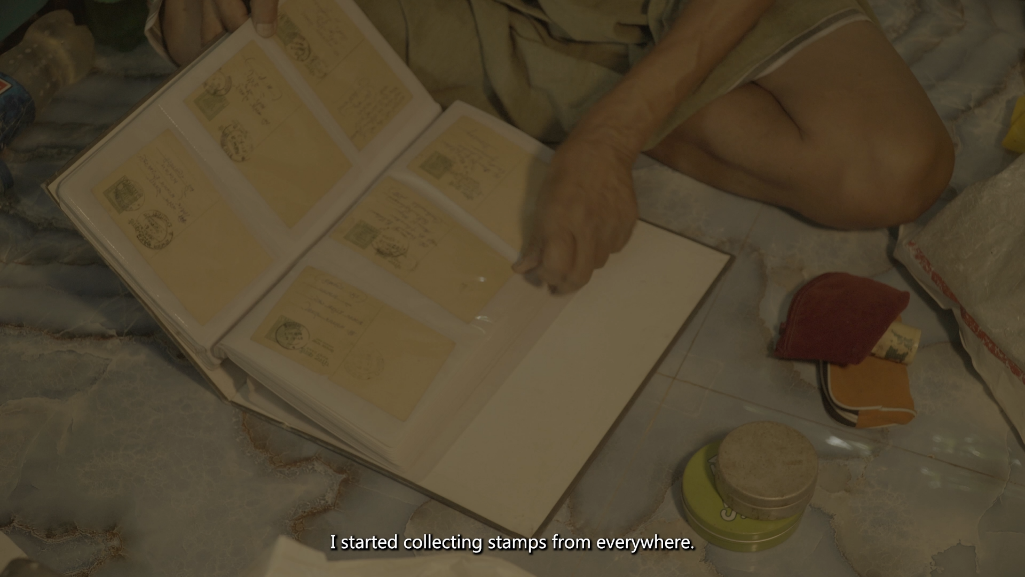
    Film still — Khandakar Selim seated cross-legged, browsing a stamp album. Subtitle reads: 'I started collecting stamps from everywhere.'
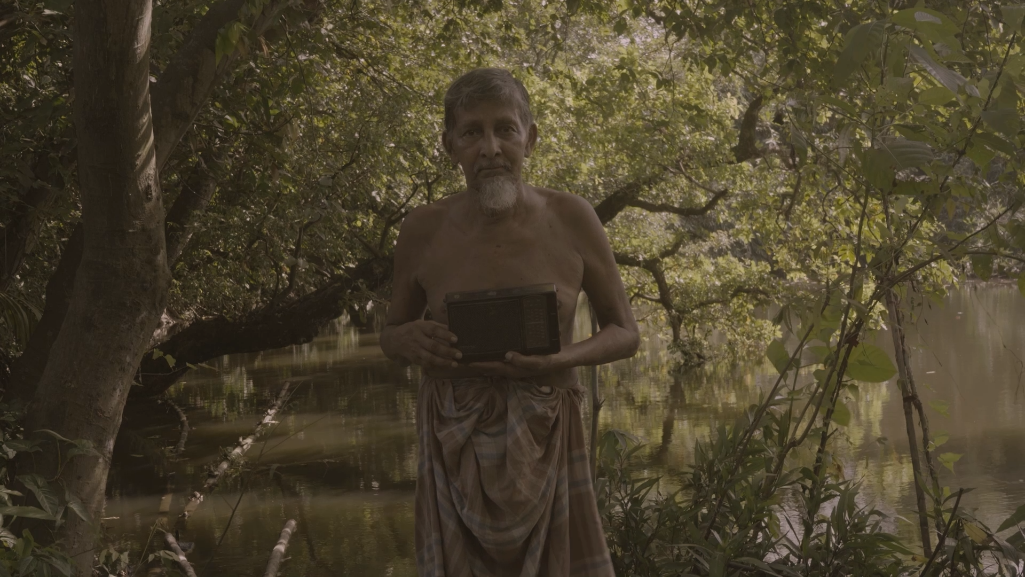
    Film still — Khandakar Selim stands in a lush green forest, holding a dark object, reflecting on how trees are being cut down and on a future where forests may only be seen in museums.
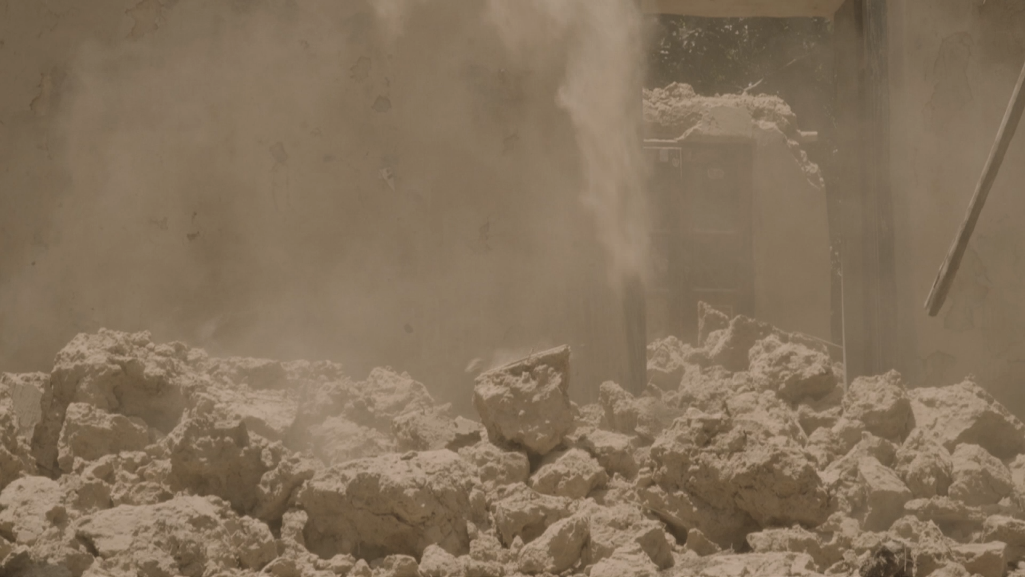
    Film still — the demolition of a mud structure, dust billowing and rubble filling the frame, documenting the destruction of Selim's mud house.
    The demolition of the Kelepara mud house

    Interactive Station

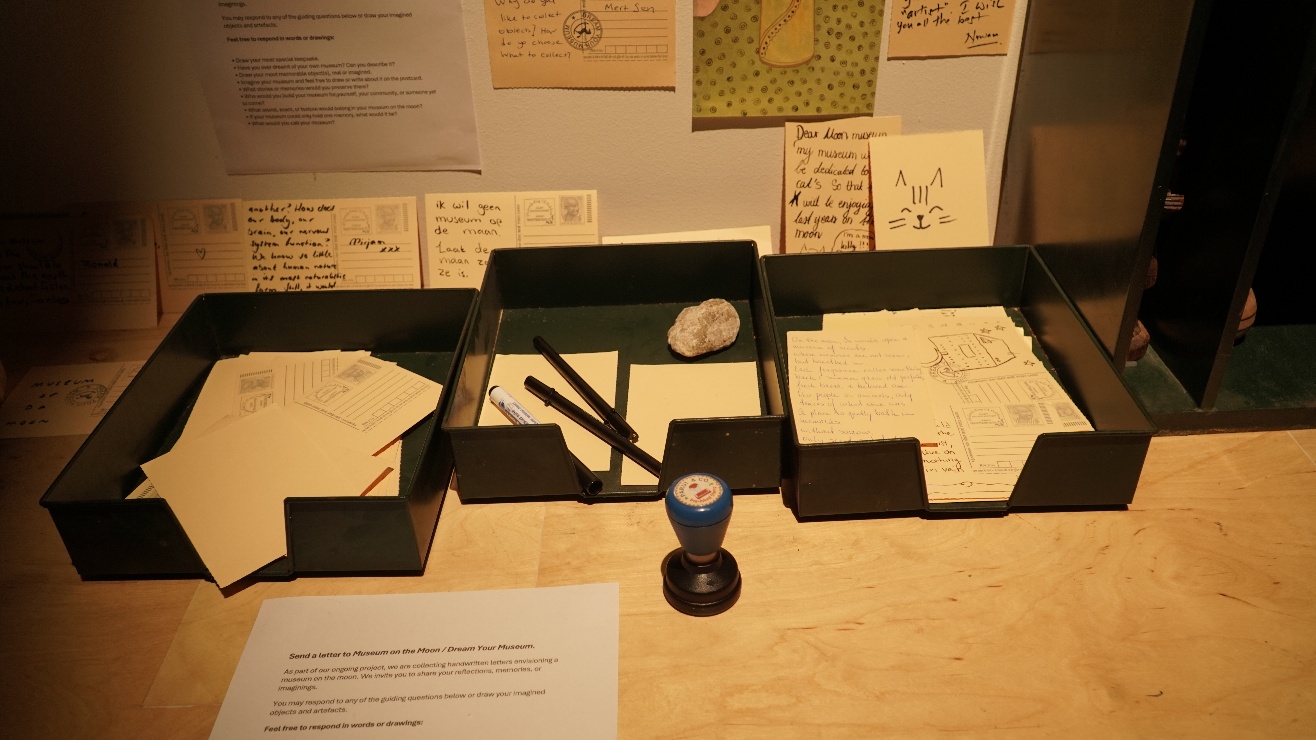
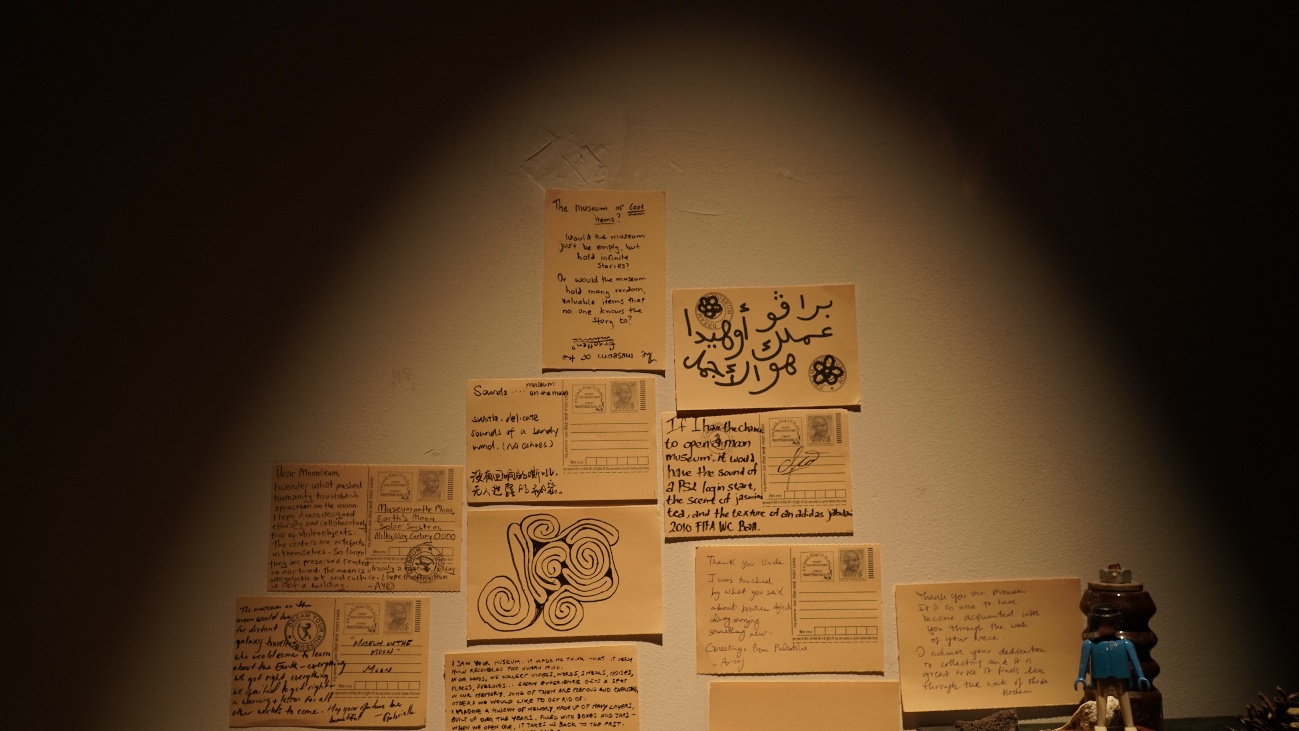
    Visitors were invited to write letters to Museum on the Moon. The letters will be displayed in a future community museum in Kelepara village, India.

    Interactive station — a desk with letter-writing materials: handwritten notes, postcards, a rubber stamp, and a printed invitation asking visitors to send a letter to 'Museum on the Moon / Dream Your Museum.'
    Interactive station — letters and postcards written by visitors, pinned to the wall under a single spotlight, alongside a small toy figure. These letters will travel to Kelepara village, India, to be held in the future community museum.
  • A Thousand Thunders

    A Thousand Thunders

    Solo Exhibition at Project 88, Mumbai, 2024

    A Collision in the Wind

    Short film, 15 minutes, 2024.

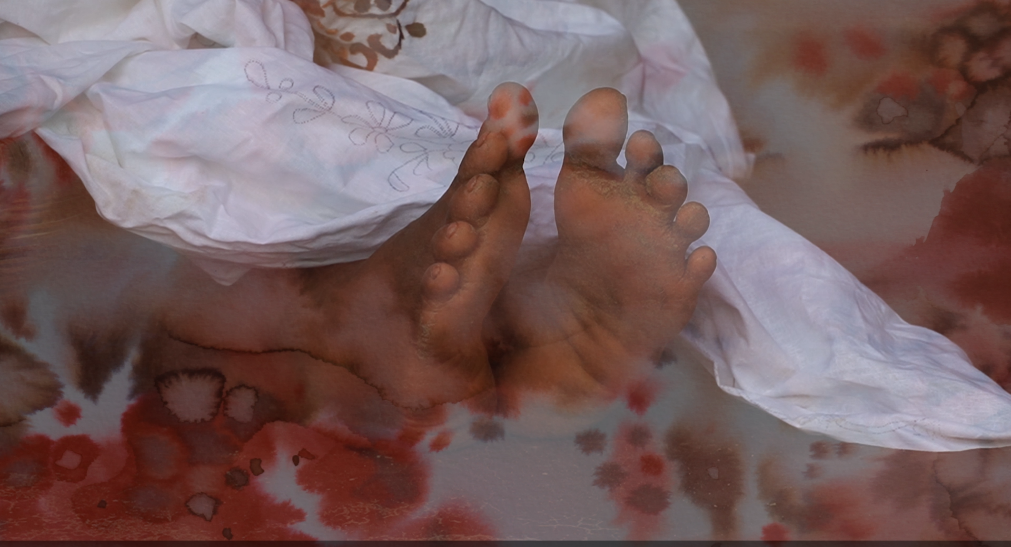
    A Collision in the Wind explores personal grief as a lens through which to witness collective trauma. The film follows a woman devastated by the violent death of her lover, killed in the city by a mob. Numb and broken, she drifts across landscapes — urban and natural — searching for solace, clarity, and a sense of belonging. A bronze bodna (ablution jug) recurs as a visual leitmotif, symbolising both spiritual intimacy and unbearable absence.

    Drawn to nature and moments of solitude, the protagonist seeks escape from grief. Yet the city — alive with crowded stations, bustling markets, and shifting skies — continually calls her back. As she journeys through this fractured yet vibrant world, the city’s textures, sounds, and silences begin to mirror her internal transformation. Her mourning becomes an act of survival, her journey a quiet resistance.

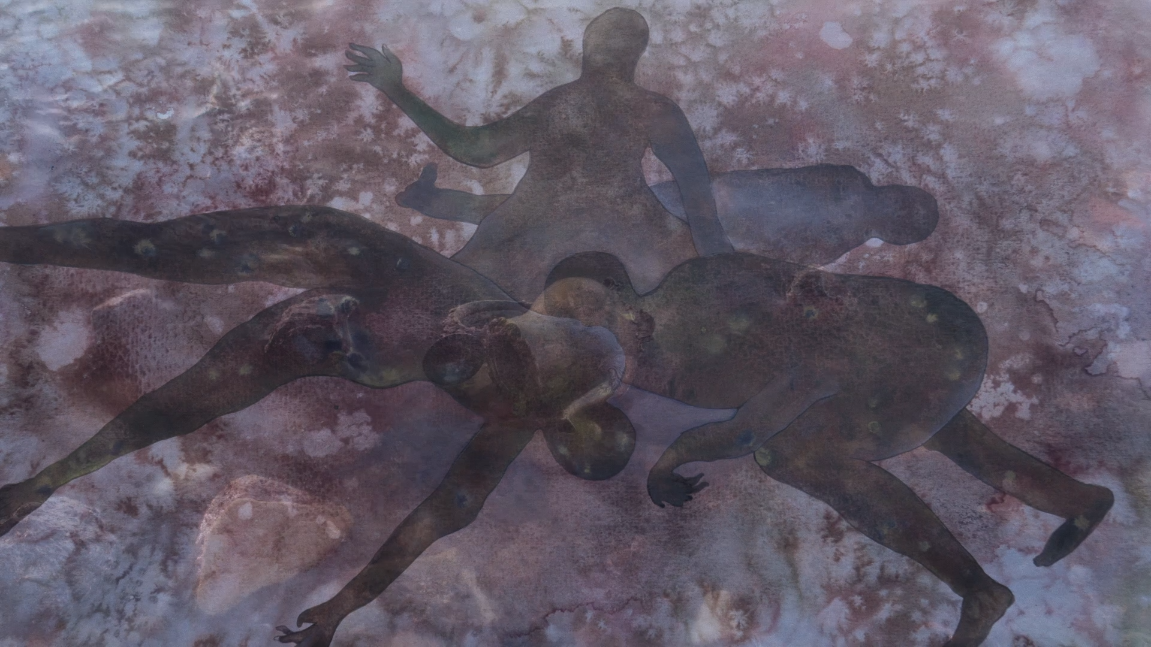
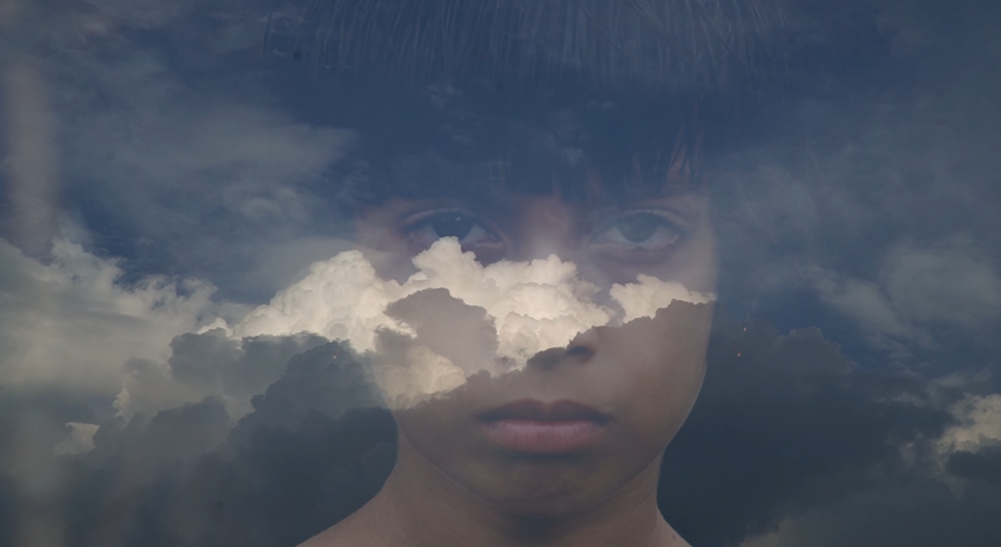
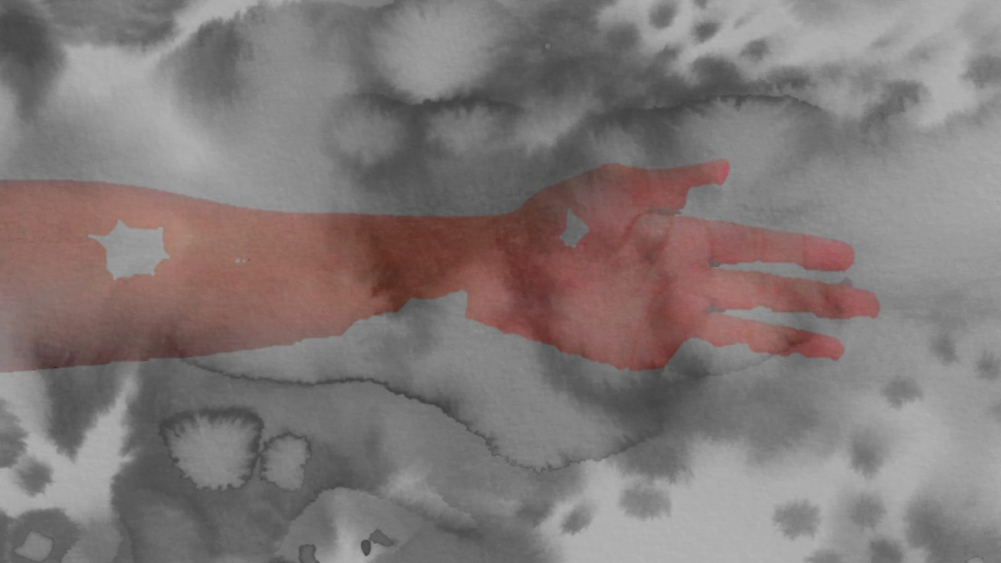
    Film still from A Collision in the Wind (short film, 15 minutes), 2024. Multiple silhouetted human figures are layered over a mottled, blood-pink textured ground — bodies fallen, one standing — evoking collective trauma and the aftermath of mob violence.
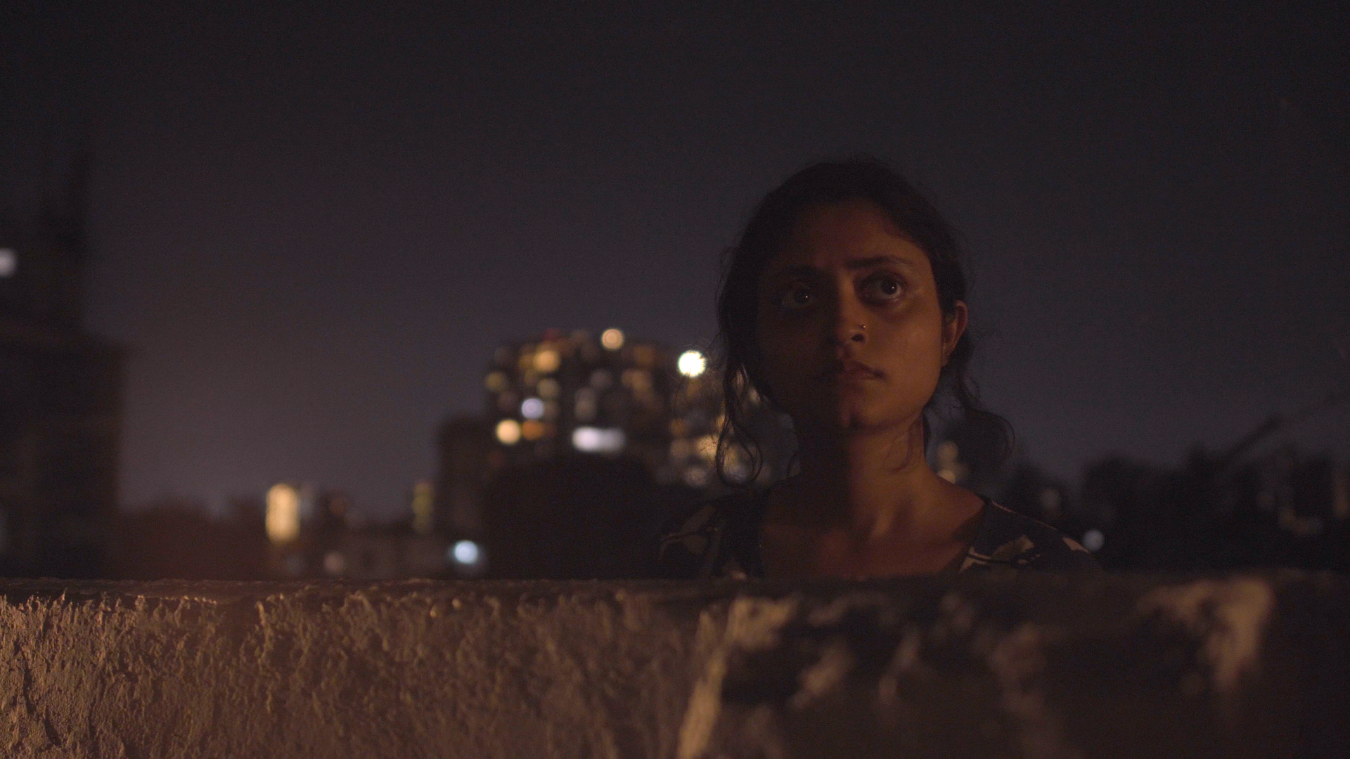
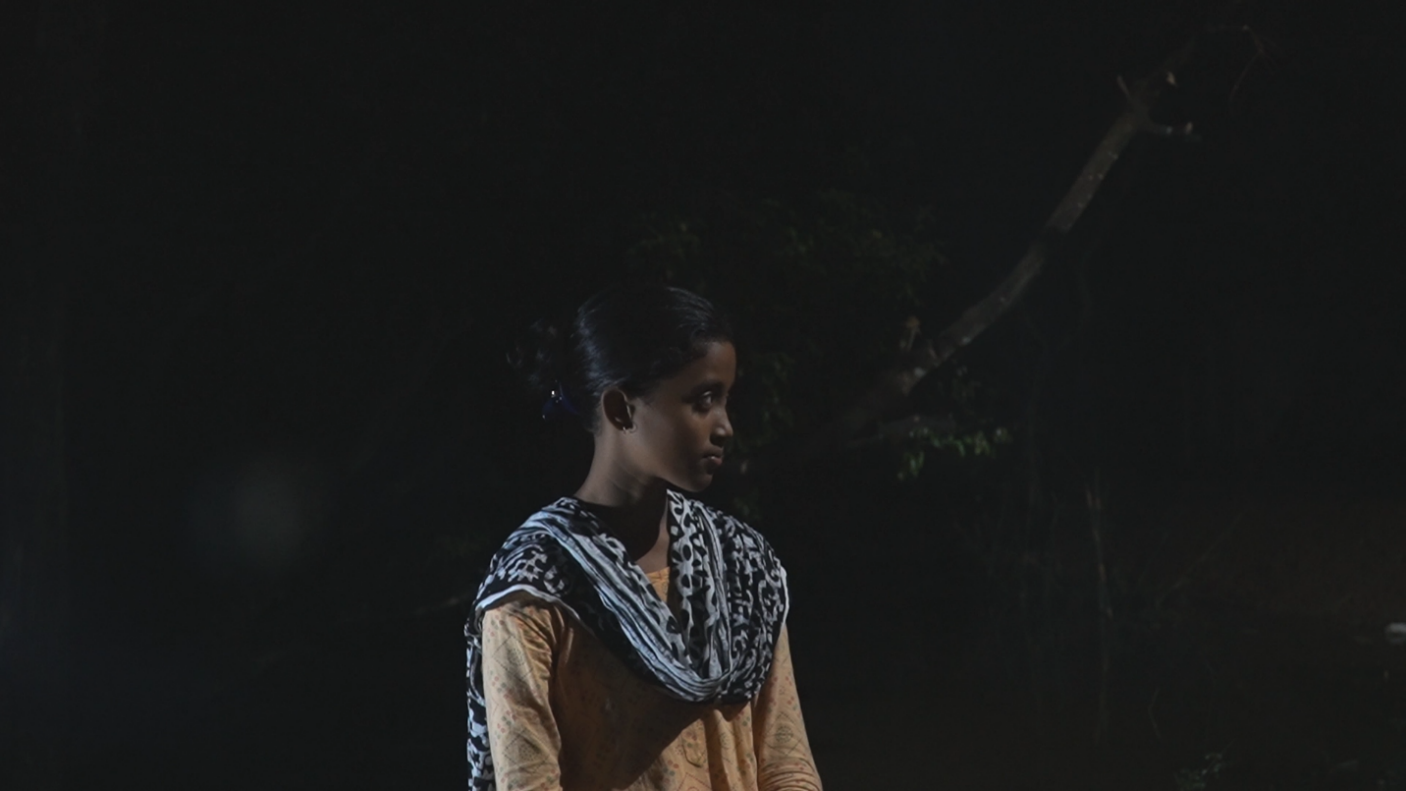
    Film still from A Collision in the Wind, 2024. Close-up of a young woman at night, her face illuminated against the city skyline behind her, looking directly into the camera — a moment of raw, still grief amid the urban environment.
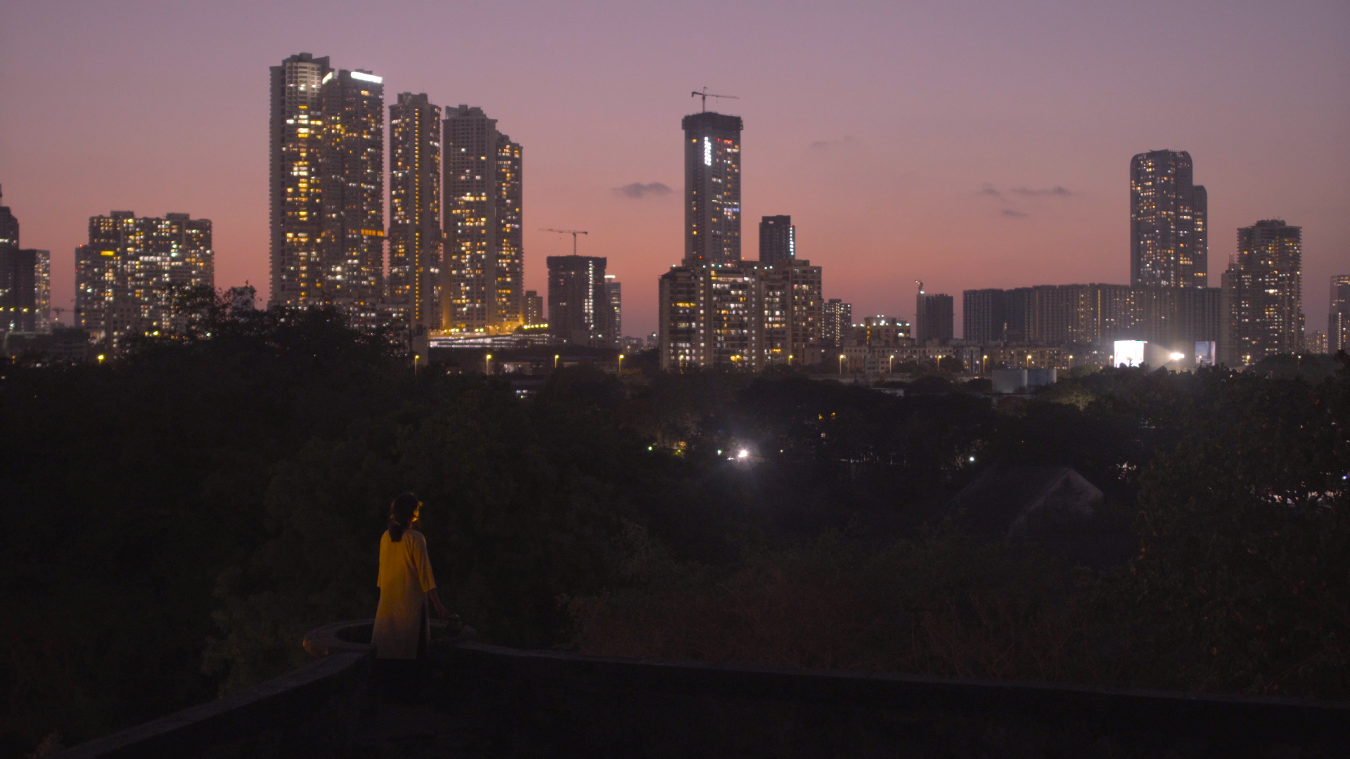
    Film still from A Collision in the Wind, 2024. A lone figure in yellow stands on a rooftop or elevated ground in silhouette against a dusky pink-and-purple city skyline at dusk, high-rise buildings lit in the background — a scene of solitude and longing.
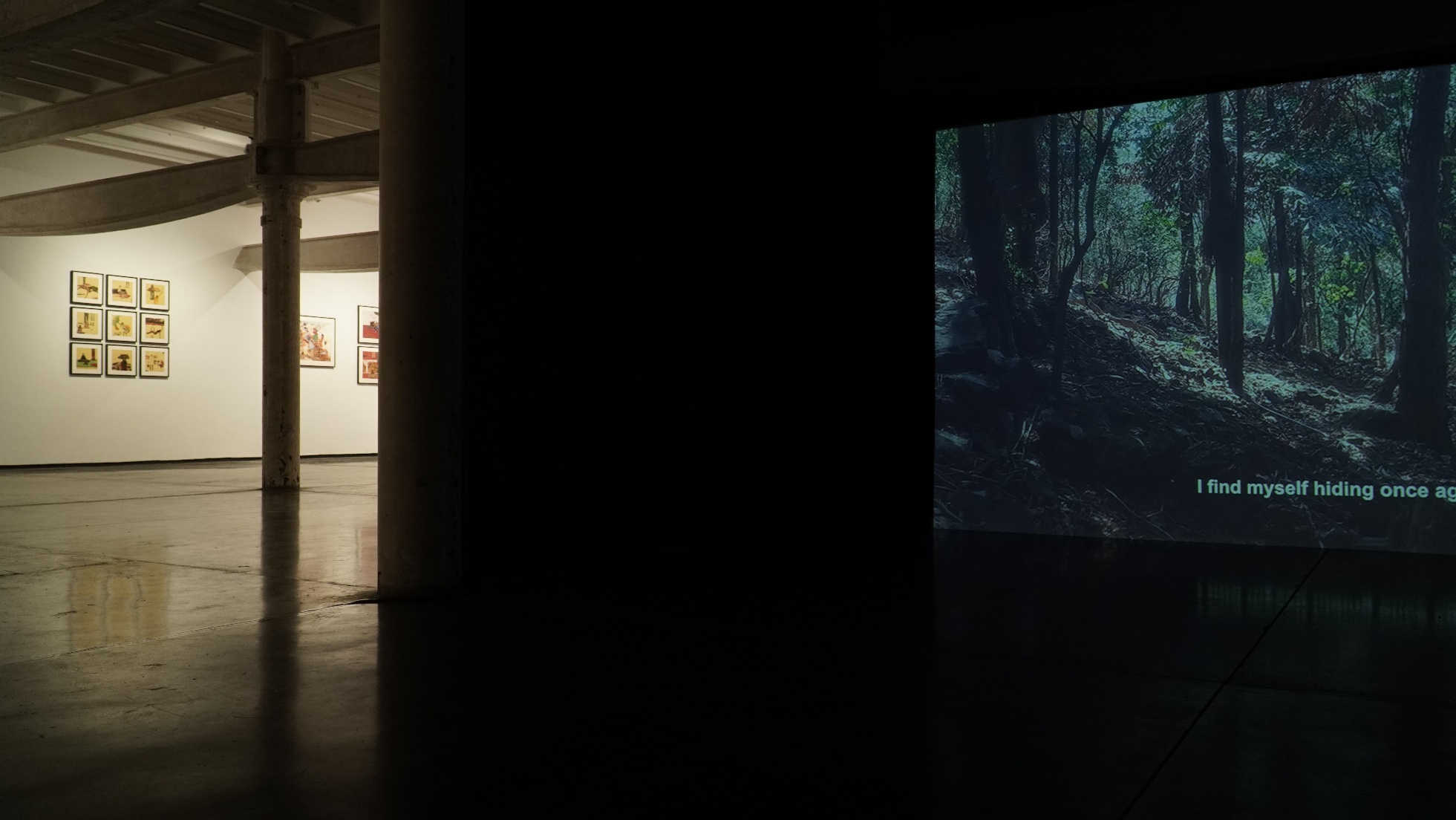
    Installation and display view of A Thousand Thunders, Project 88, Mumbai, 2024. The darkened gallery space shows the film A Collision in the Wind projected on the right wall while the lit gallery beyond reveals a grid of small framed watercolour paintings and larger works mounted on the walls.
    Gallery view with film projection, Project 88, Mumbai, 2024

    Paintings

    Large-Scale Works

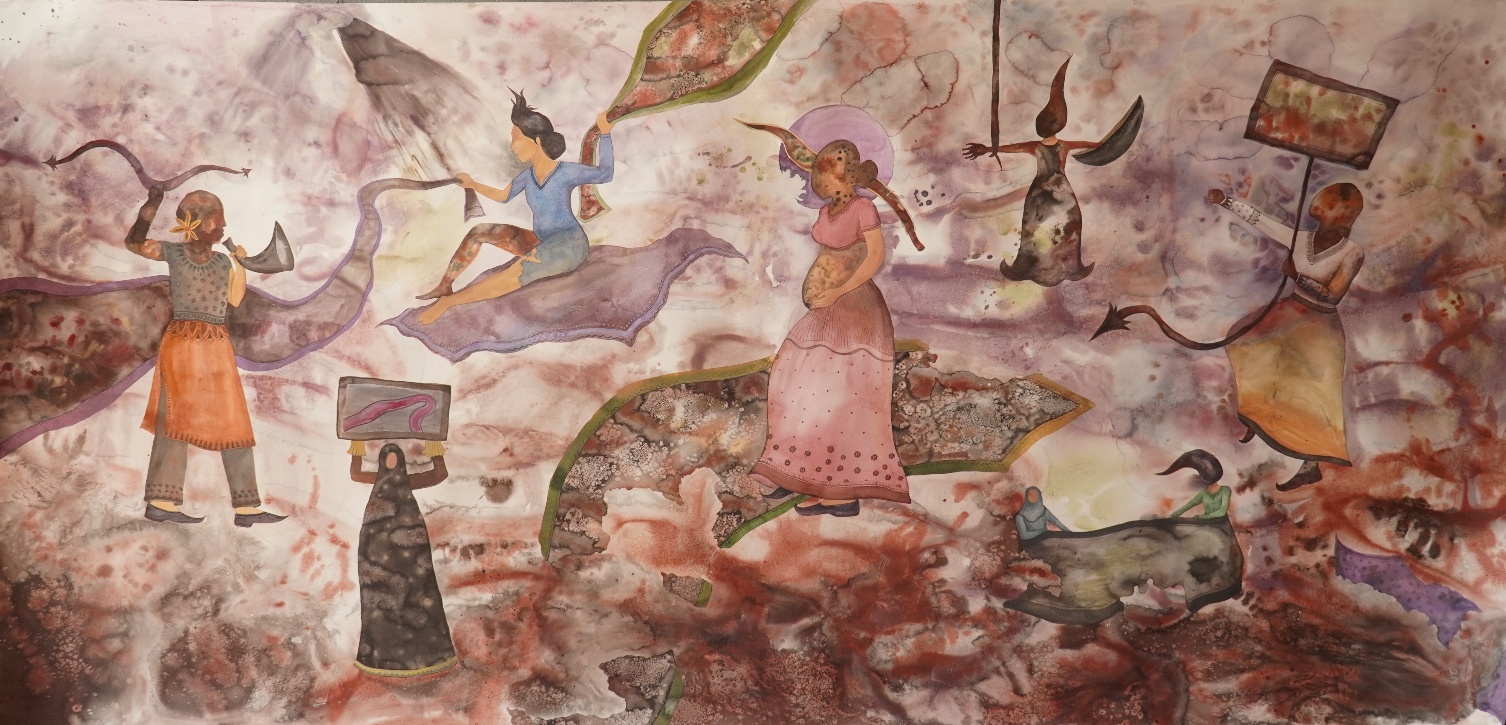
    Where the Wind Carries Hope, watercolour on paper, 60 x 126 inches, 2024. A large panoramic watercolour in a palette of dusty pinks, warm earth tones, and violet-red. Figures drawn in a vocabulary blending South Asian miniature painting and folk imagery surge across the composition — some mounted, some flying, some armed with bows and arrows, a central veiled figure in purple commanding the space. The work evokes a collective, magical-realist uprising.
    Where the Wind Carries Hope, watercolour on paper, 60 × 126 inches, 2024
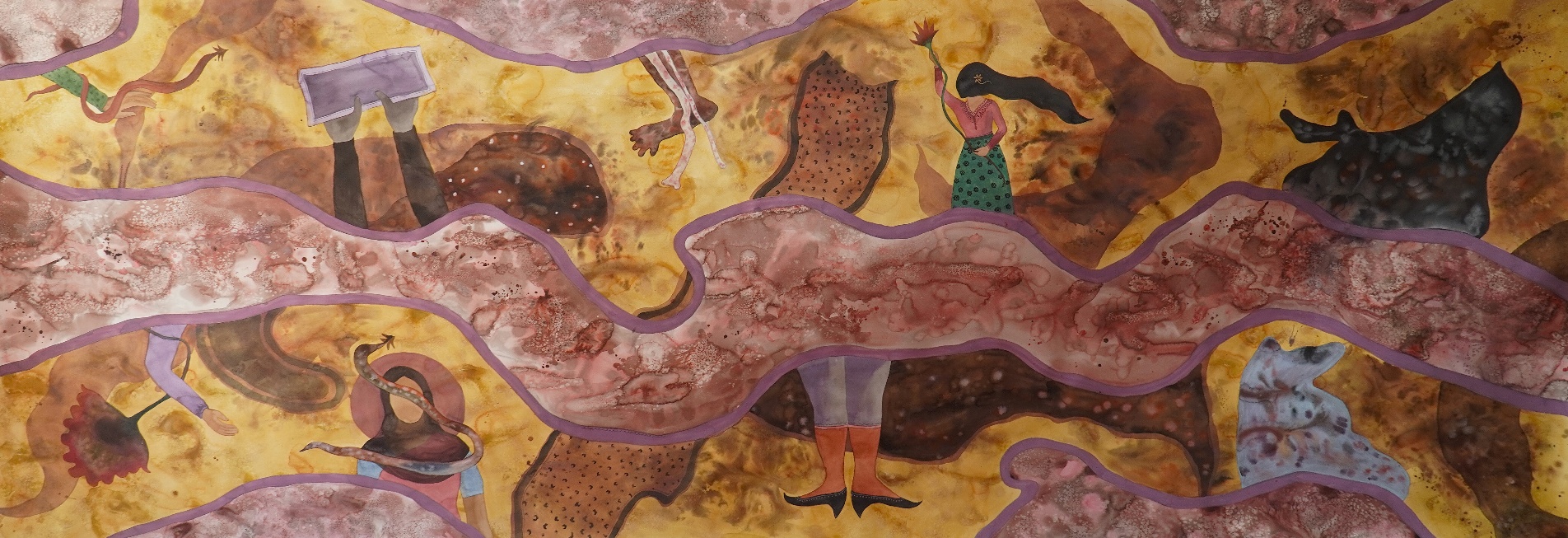
    Whispers of Emptiness, mixed media on paper, 60 x 168 inches, 2024. A long horizontal work in golden amber and deep purple. A river-like purple form outlined in gold winds across the entire width of the composition, threading together multiple veiled and unveiled figures — some holding tools, some crouching, some emerging from the ground — in a procession of grief, labour, and quiet resistance.
    Whispers of Emptiness, mixed media on paper, 60 × 168 inches, 2024
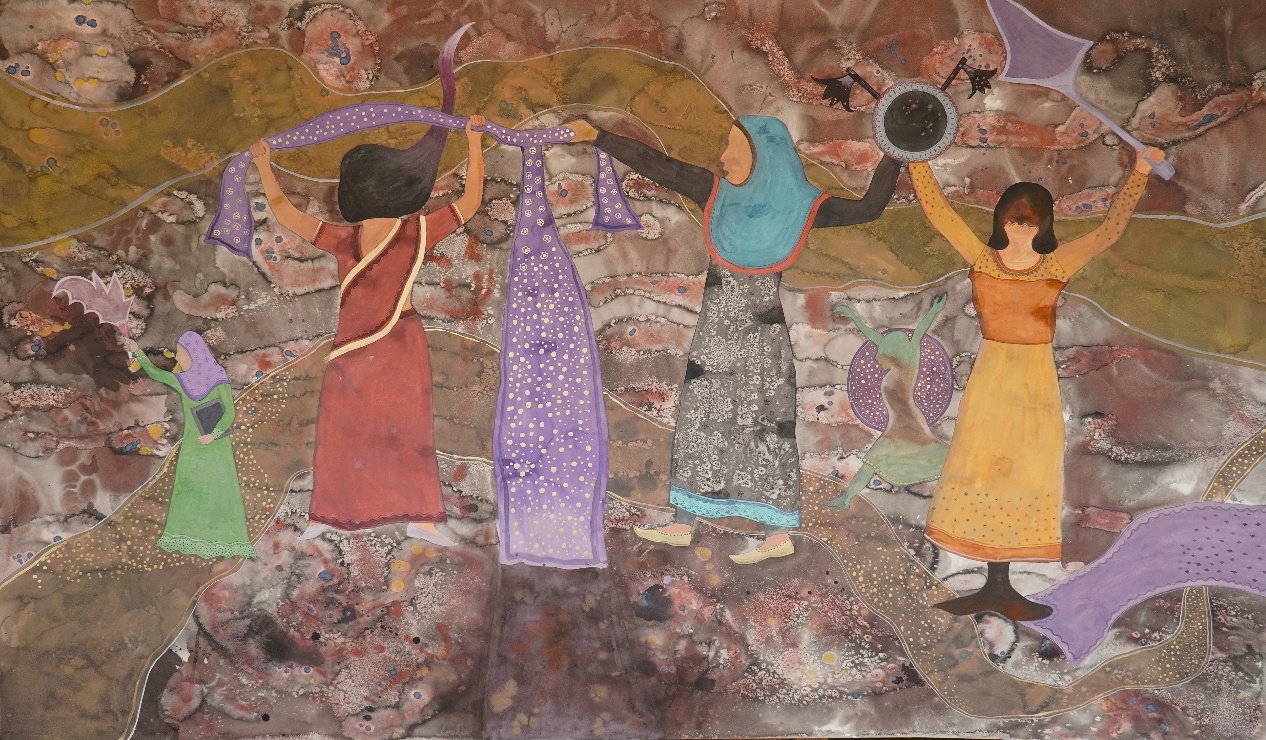
    The Symphony of Tomorrow, mixed media on paper, 60 x 100 inches, 2024. A wide-format painting depicting five women in vivid, patterned dress — in green, purple, teal, gold, and orange — each holding a domestic or ceremonial object aloft: a pot, a broom, a platter. Their raised arms and shared rhythm transform the gesture of labour into one of collective protest, set against a layered, mineral-textured ground.
    The Symphony of Tomorrow, mixed media on paper, 60 × 100 inches, 2024

    Individual Works

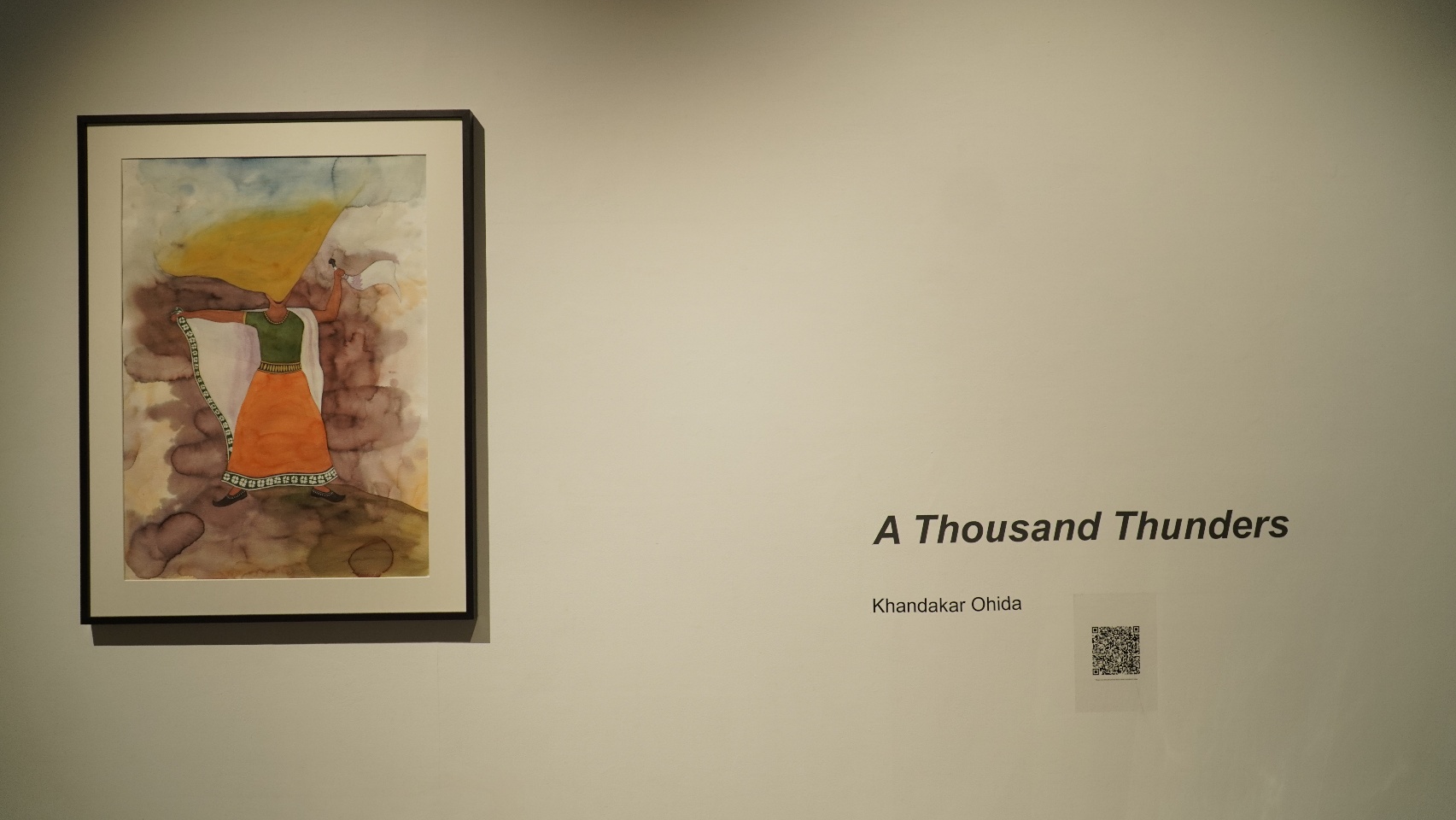
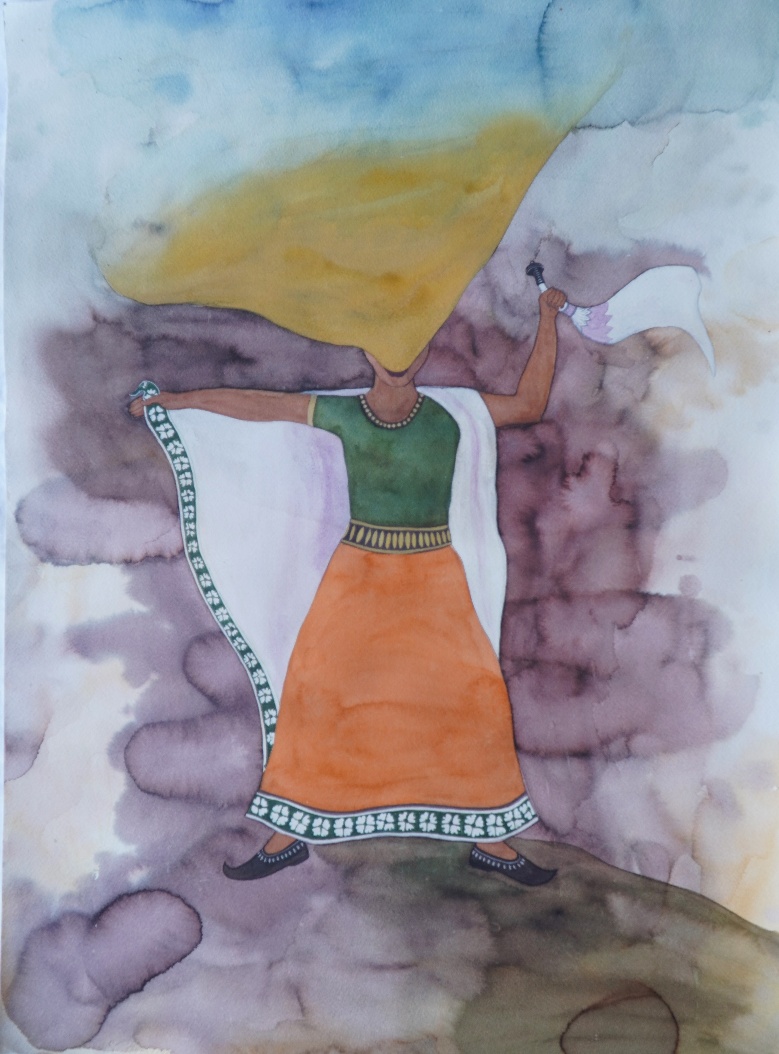
    The Quiet Rumble, watercolour and photo ink on paper, 30 x 21 inches, 2024. A portrait-format watercolour of a headless female figure in a saffron orange skirt, green top, and beaded belt, standing with arms extended holding a small white flag. The figure is surrounded by billowing dark purple-grey storm clouds and stands on rough ground, her body the axis between sky and earth.
    The Quiet Rumble
    watercolour and photo ink on paper
    30 × 21 inches, 2024
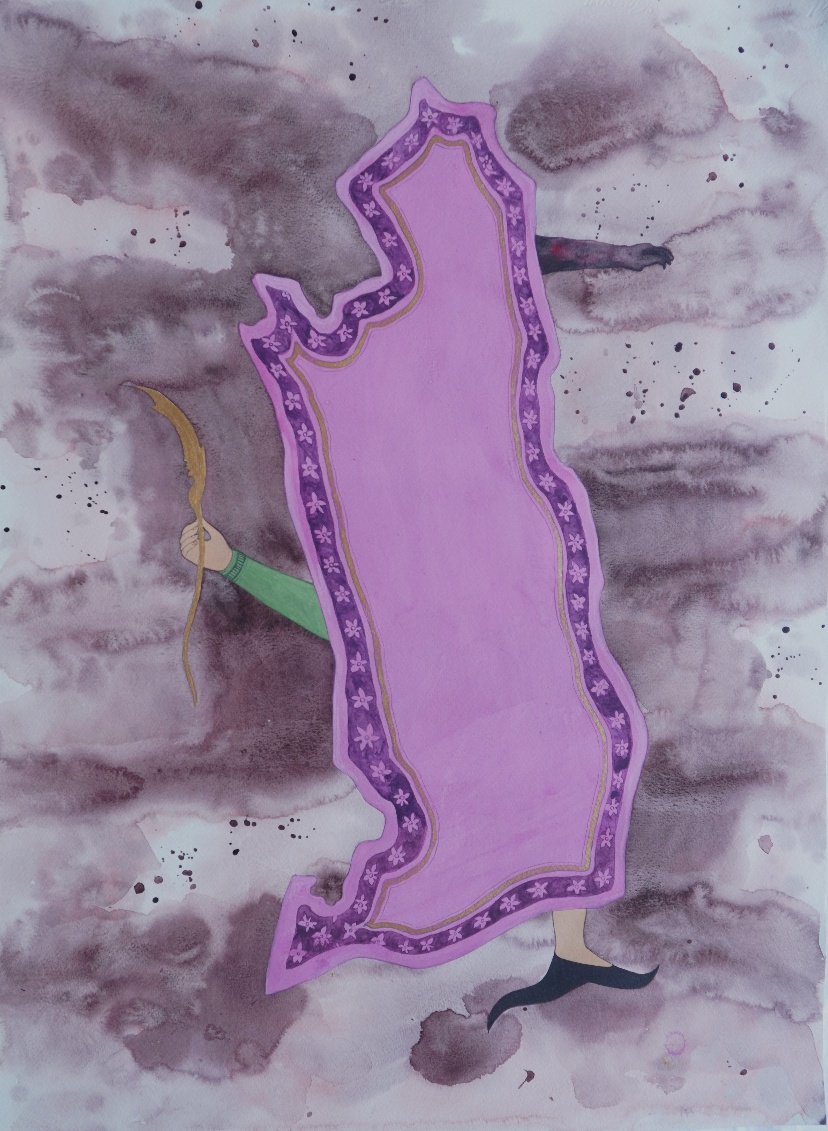
    The Veil of Fury, watercolour and acrylic gold on paper, 21 x 30 inches, 2024. A portrait-format watercolour in which the veil itself becomes the subject and the agent: an embroidered purple garment — faceless, with only hands and feet visible — holds a bow, the fabric billowing and animated against a deep purple-grey wash. The veil is rendered simultaneously as body and weapon.
    The Veil of Fury
    watercolour and acrylic gold on paper
    21 × 30 inches, 2024
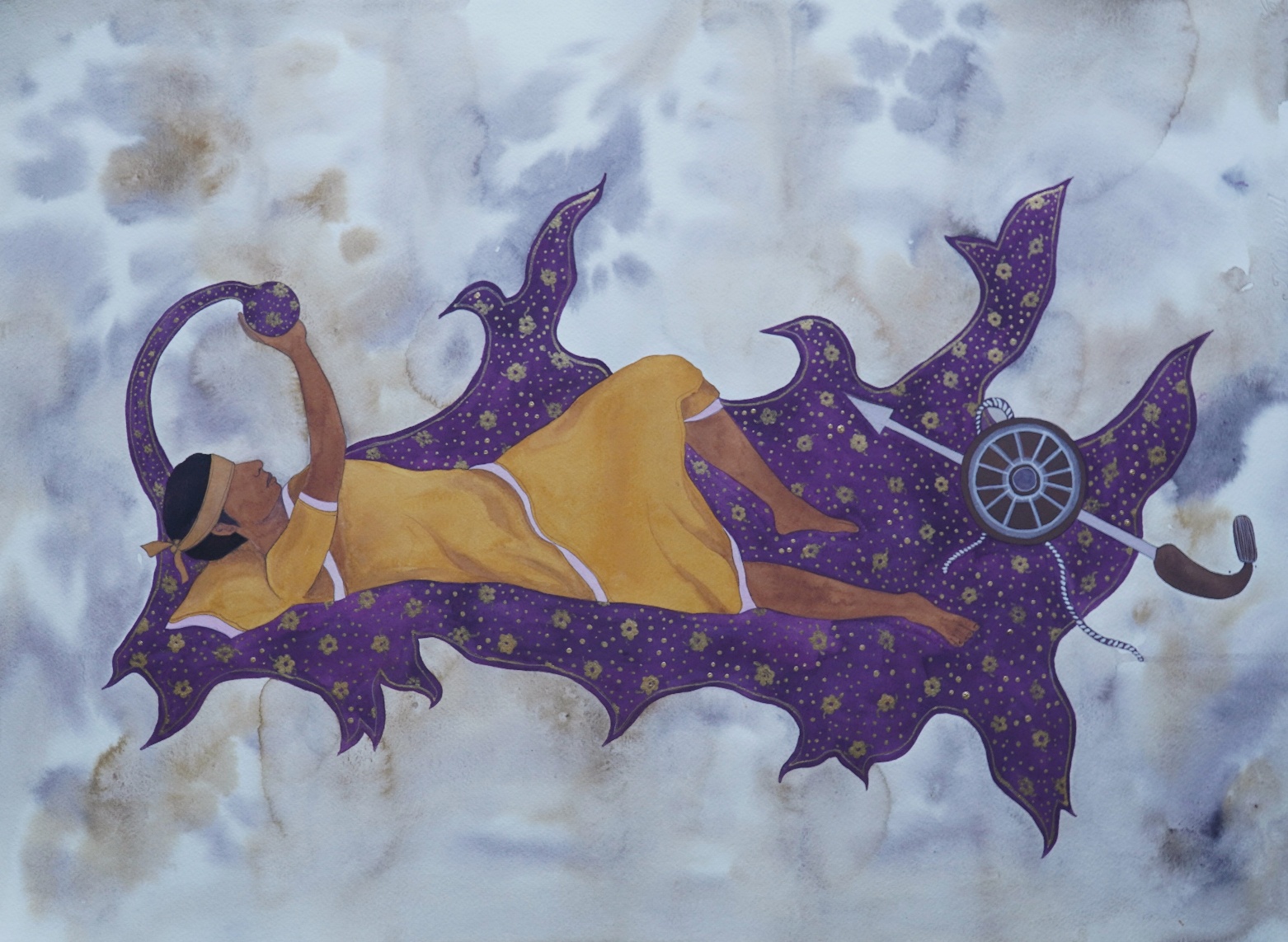
    Where Tomorrow Unfolds, watercolour and acrylic gold on paper, 30 x 21 inches, 2024. A woman in deep golden-yellow cloth reclines and floats horizontally, her body surrounded by spiky purple forms and a spinning wheel or chakra. The golden acrylic gives the work a luminous, icon-like quality. The composition hovers between dreaming and dying.
    Where Tomorrow Unfolds
    watercolour and acrylic gold on paper
    30 × 21 inches, 2024
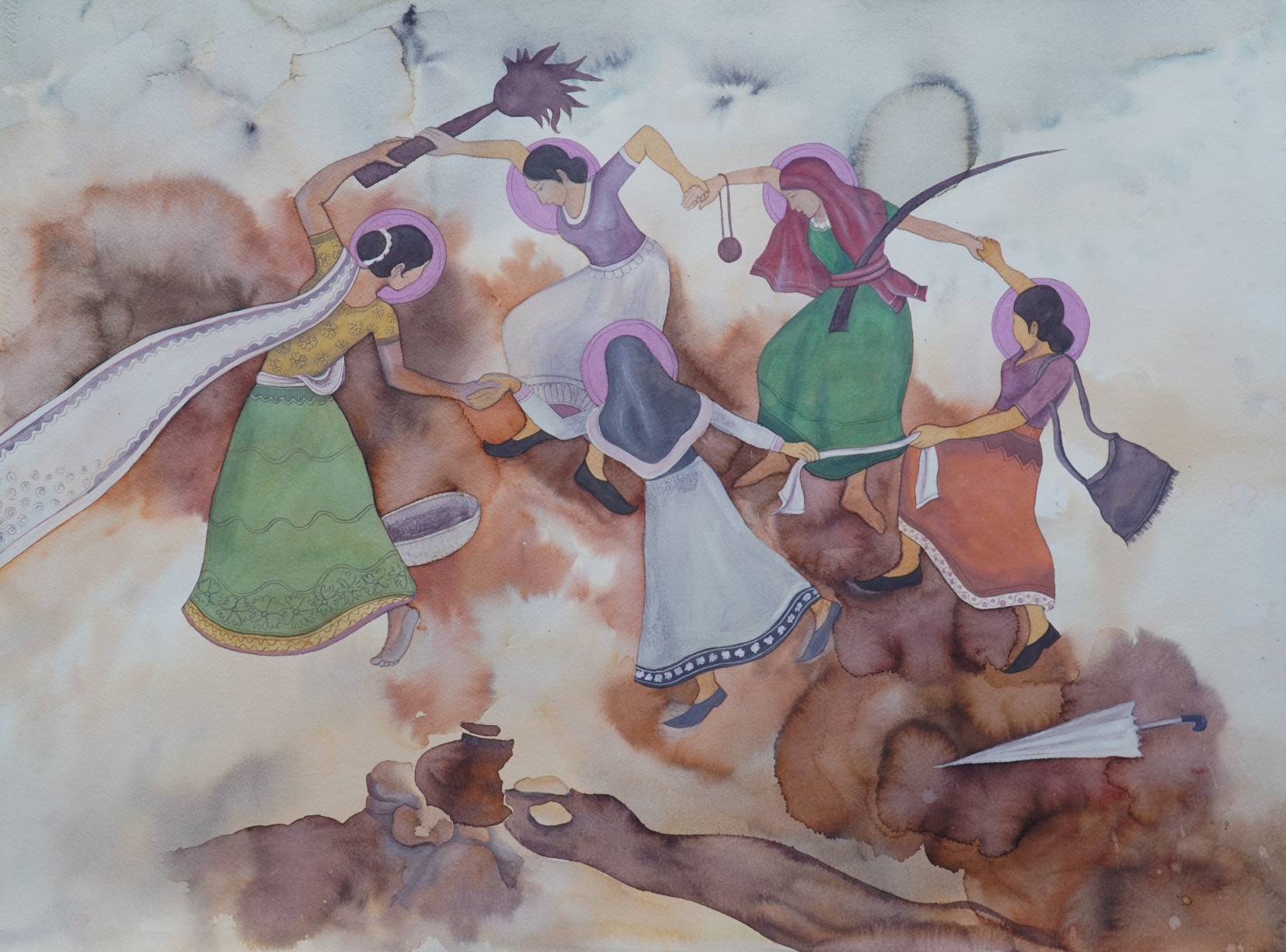
    Dancing with Defiance, watercolour on paper, 30 x 21 inches, 2024. A group of women in colourful traditional dress — green, purple, teal, orange — dance or march together, each carrying a domestic tool: brooms, pots, ladles. Their movement is joyful and insistent, the choreography of everyday labour transformed into collective protest.
    Dancing with Defiance
    watercolour on paper
    30 × 21 inches, 2024

    Untitled-1, watercolour on paper, 8 × 11 inches each, 2024

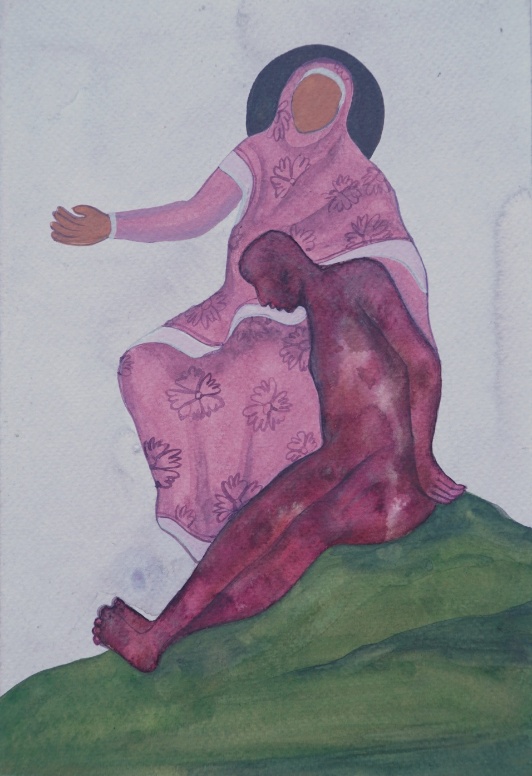
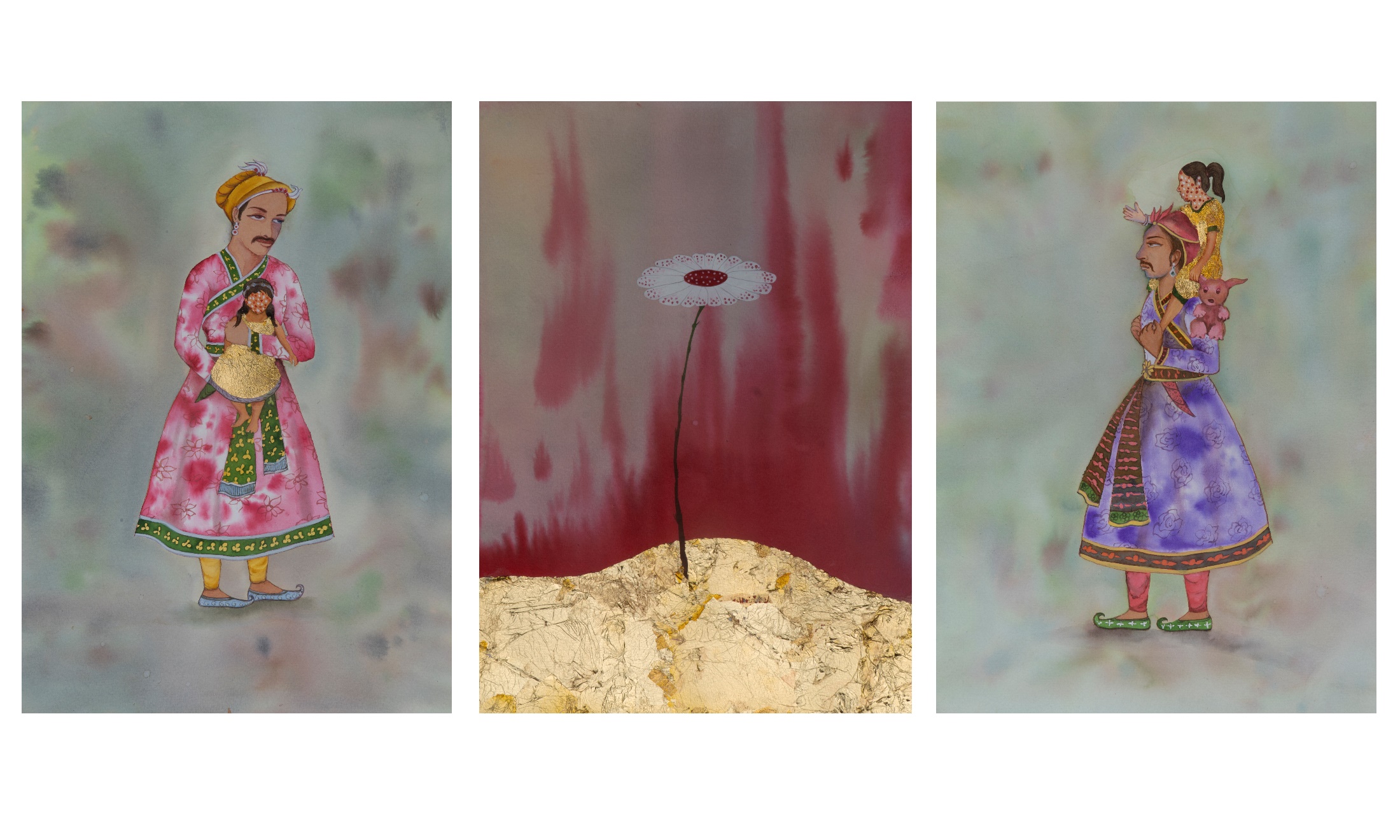
    Untitled-1 (i), watercolour on paper, 8 x 11 inches, 2024. A woman in a pink floral hijab and matching dress sits on a green hillock, one arm reaching outward. In her lap rests the body of a man — depicted as a dark burgundy-red silhouette with visible wounds — in a composition that echoes the pietà.
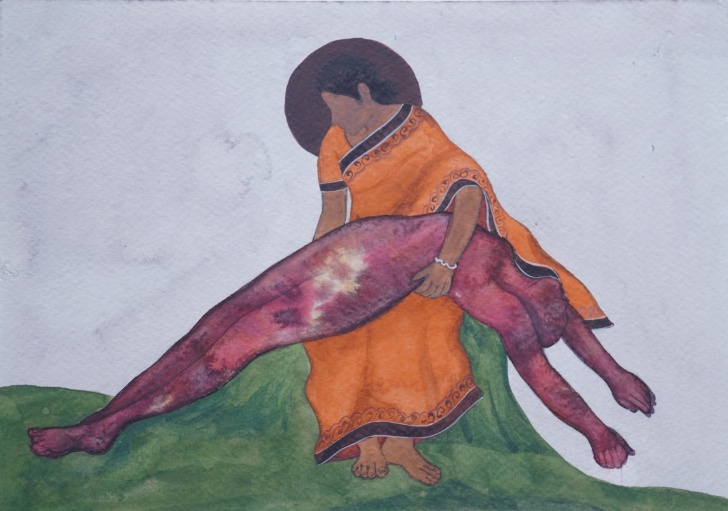
    Untitled-1 (ii), watercolour on paper, 8 x 11 inches, 2024. A woman in an orange sari bends forward on a green ground, cradling the extended legs of a wounded body — the limbs rendered in deep red-wine with bruised markings — the face of the figure turned away in grief.
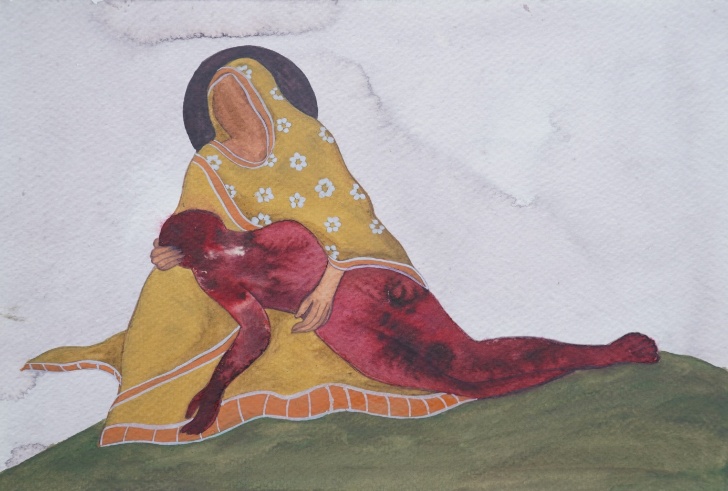
    Untitled-1 (iii), watercolour on paper, 8 x 11 inches, 2024. A faceless woman in a yellow floral-patterned hijab and dress, sitting on green ground, holds a wounded male body — shown in dark burgundy with bruising — across her lap in a tender but sorrow-laden embrace.
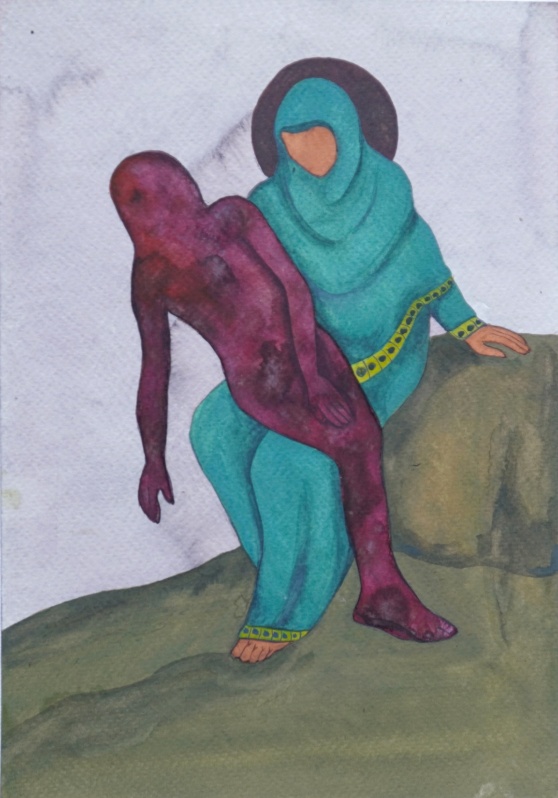
    Untitled-1 (iv), watercolour on paper, 8 x 11 inches, 2024. A woman in a turquoise hijab and tunic, trimmed with gold-green geometric detail, sits on a rocky green ground beside a wounded figure whose dark body slumps against her — a moment of protective grief.
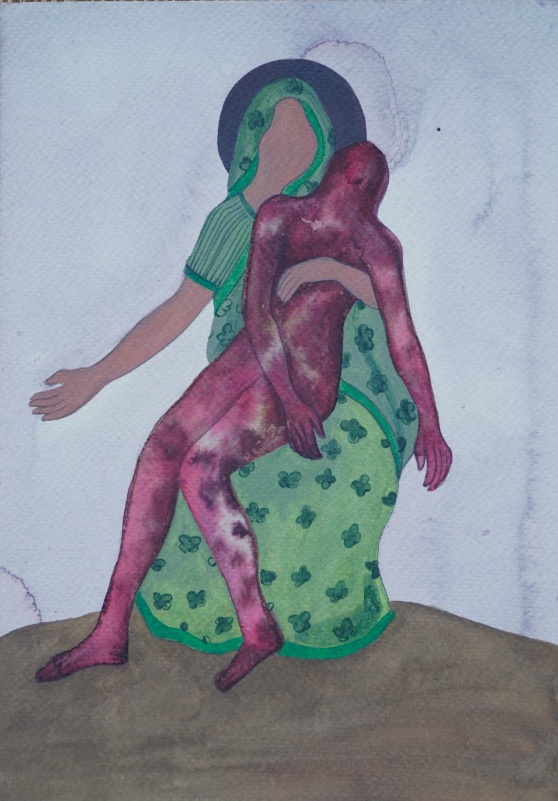
    Untitled-1 (v), watercolour on paper, 8 x 11 inches, 2024. A woman in a green top and green floral skirt holds a wounded, bruised body — rendered in deep rose-red — against her own, both figures merging into an upright posture that reads as much like defiance as mourning.

    Untitled-2, watercolour and golden acrylic on wasli board, 11 × 10 inches each, 2024

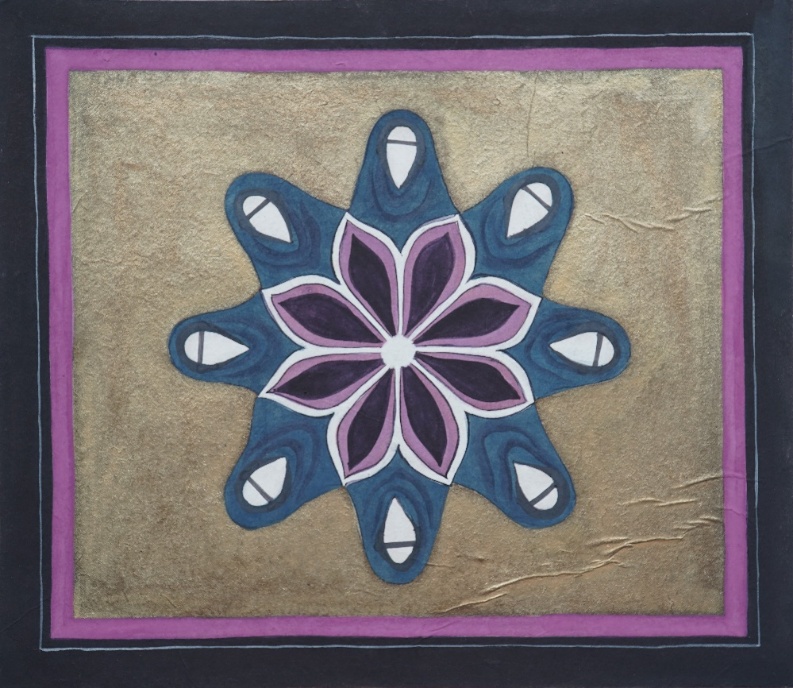
    Untitled-2 (i), watercolour and golden acrylic on wasli board, 11 x 10 inches, 2024. A mandala-like eight-petalled flower form in deep blue-violet and purple tones on a burnished gold ground, framed in a purple-and-black border.
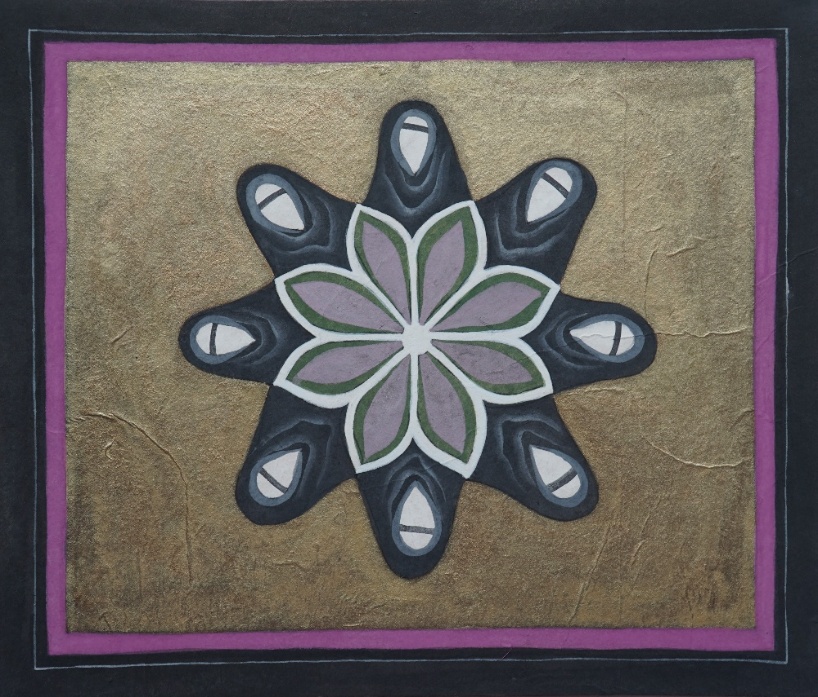
    Untitled-2 (ii), watercolour and golden acrylic on wasli board, 11 x 10 inches, 2024. A mandala-like eight-petalled flower in muted grey-green and mauve on a gold ground with a purple-and-black frame.
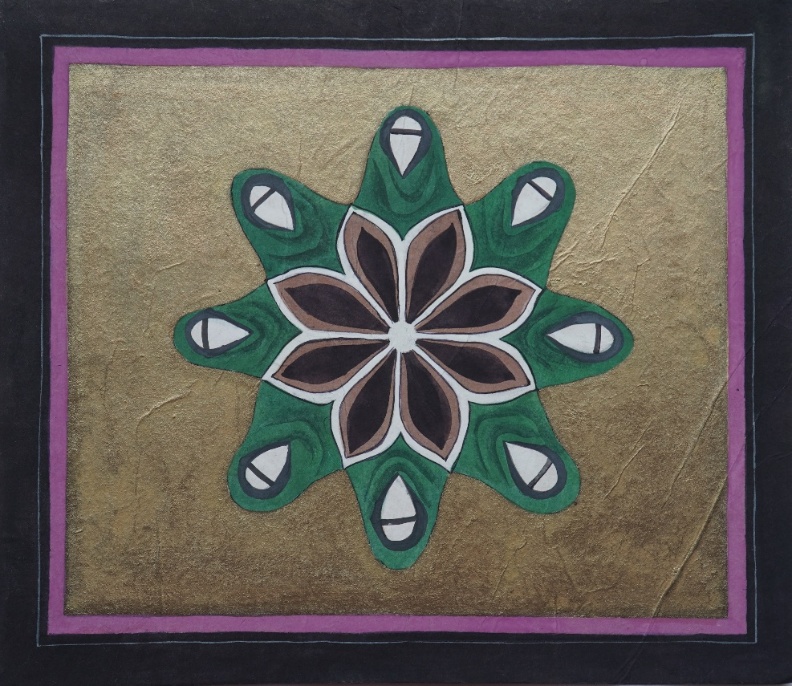
    Untitled-2 (iii), watercolour and golden acrylic on wasli board, 11 x 10 inches, 2024. A mandala flower form in rich dark green and deep brown-black on a gold ground, framed in purple and black.
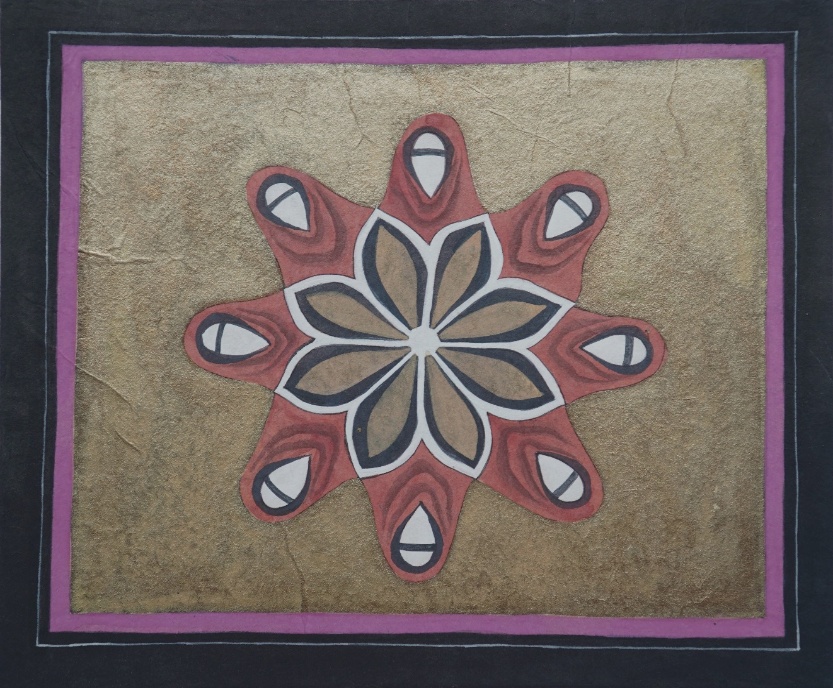
    Untitled-2 (iv), watercolour and golden acrylic on wasli board, 11 x 10 inches, 2024. A mandala flower in warm terracotta-red and black-brown on a gold ground with a purple-and-black frame.

    Untitled-4, watercolour on paper, 16 × 12 inches each, 2024

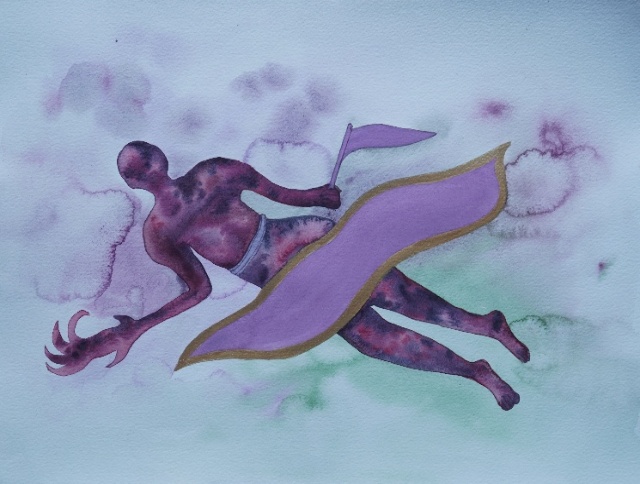
    Untitled-4 (i), watercolour on paper, 16 x 12 inches, 2024. A wounded, bruised figure in motion — running or flying — trails a fragment of purple fabric outlined in gold and carries a small flag.
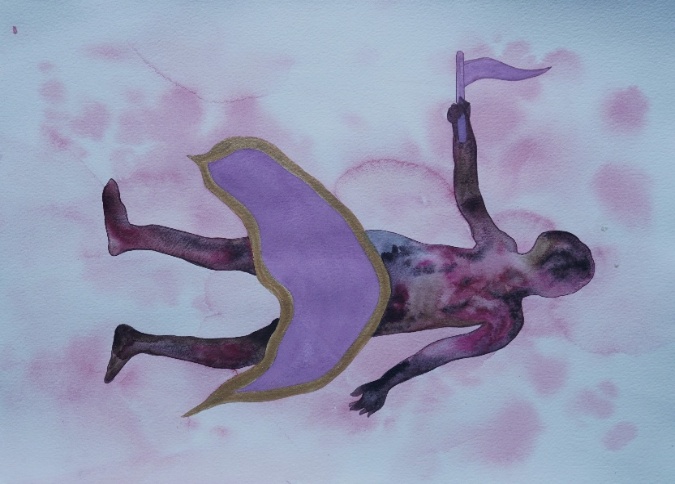
    Untitled-4 (ii), watercolour on paper, 16 x 12 inches, 2024. A battered figure lies horizontal, one arm raised holding a small flag, the purple-gold fabric cape streaming beneath the body — suspended between flight and fall, between life and death.
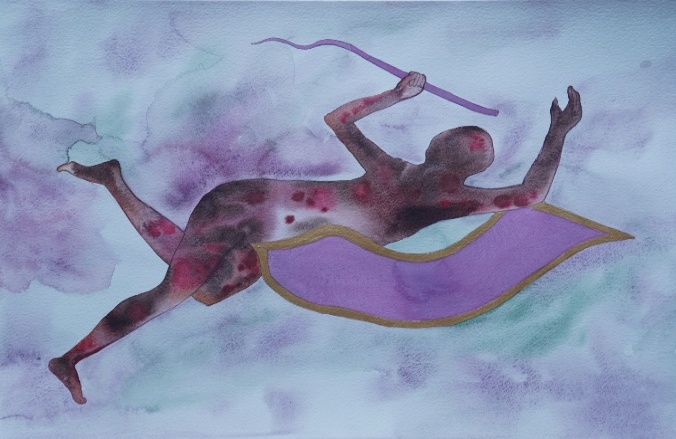
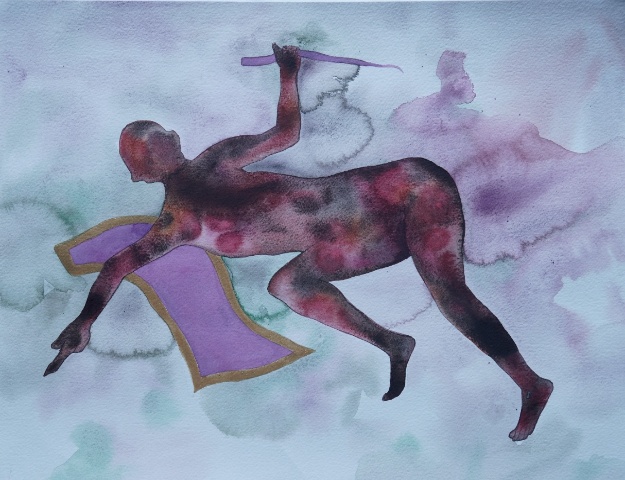
    Untitled-4 (iii), watercolour on paper, 16 x 12 inches, 2024. A wounded figure at full stretch across the paper, one hand raised with a slender blade, the other trailing downward. The purple-and-gold fabric unfurls beneath — the body bruised and spotted but forcefully airborne.
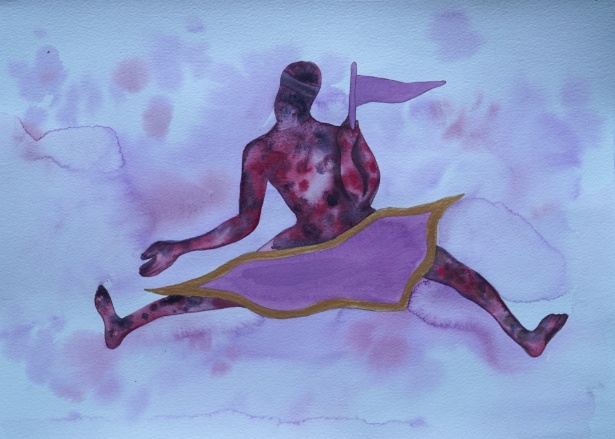
    Untitled-4 (iv), watercolour on paper, 16 x 12 inches, 2024. A bruised figure in a seated but propulsive posture — leaning back, one arm raised holding a flag — the purple-gold fabric spread beneath as both propulsion and wound.
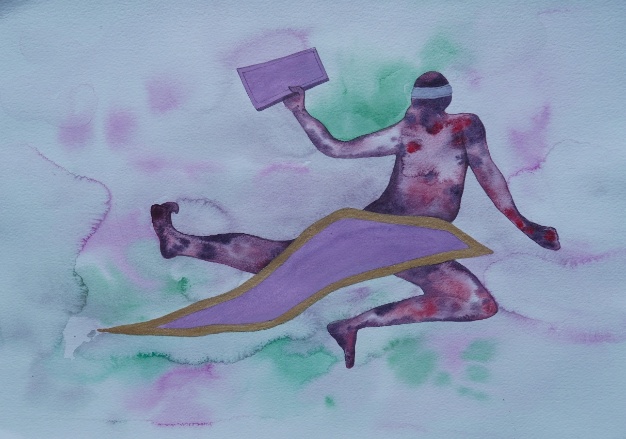
    Untitled-4 (v), watercolour on paper, 16 x 12 inches, 2024. A figure mid-leap, torso marked with wounds, holding a placard or sign aloft in one hand, purple-and-gold fabric spread beneath — the act of protest made airborne and urgent.
    Untitled-4 (vi), watercolour on paper, 16 x 12 inches, 2024. A figure lunging forward and downward, one arm raised with a blade-like form, the body heavily bruised in deep purple-red, the gold-outlined purple fabric twisting behind — the most violent and kinetic image in the series.

    Untitled-5, watercolour on paper, 21 × 30 inches, 2024

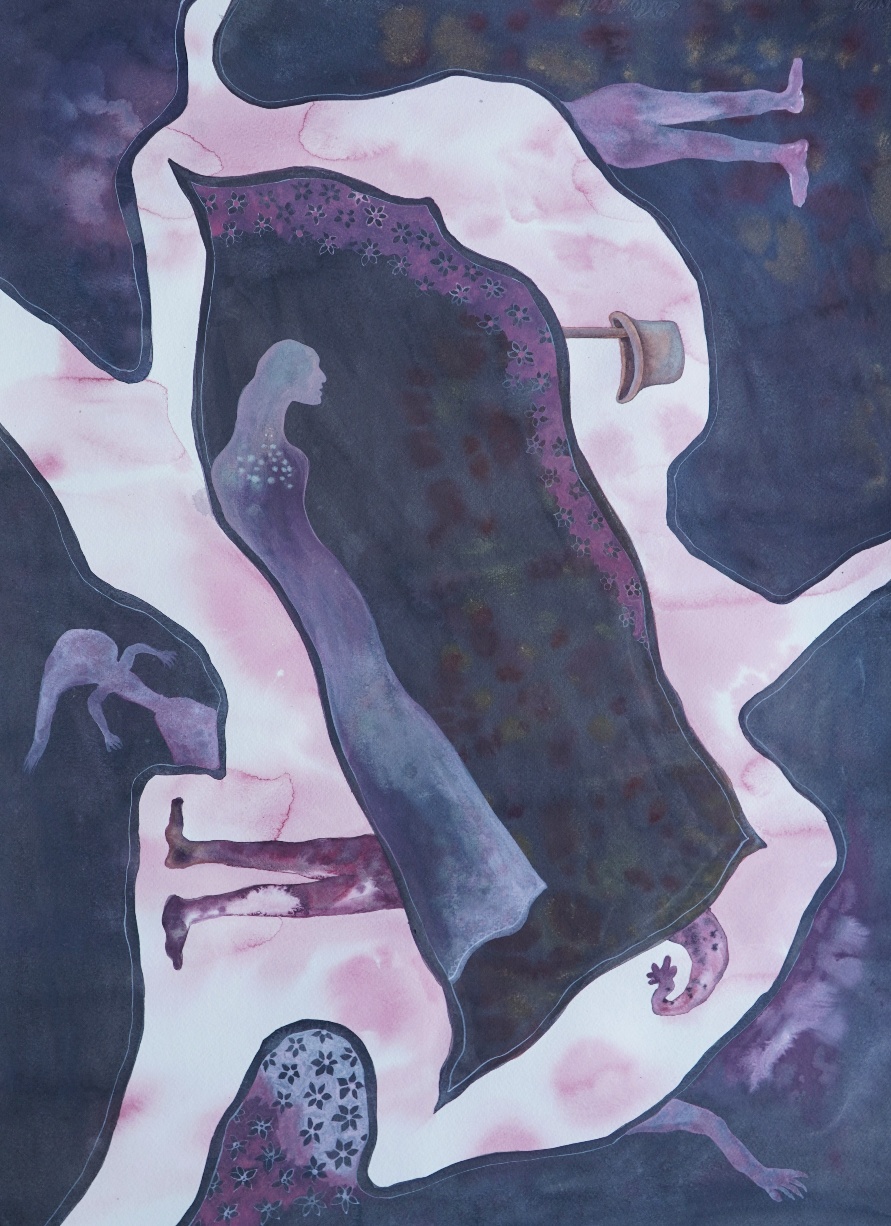
    Untitled-5, watercolour on paper, 21 x 30 inches, 2024. A large single work in a palette of deep indigo, purple, and pale pink. A veiled figure in a dark embroidered cloak stands at the centre, surrounded by fragmented limbs — legs, arms — and a small lizard-like creature. The composition is dense and fractured, the figure at once overwhelmed and sovereign.

    Untitled-6, watercolour and acrylic gold on paper, 15 × 11 inches each, 2024

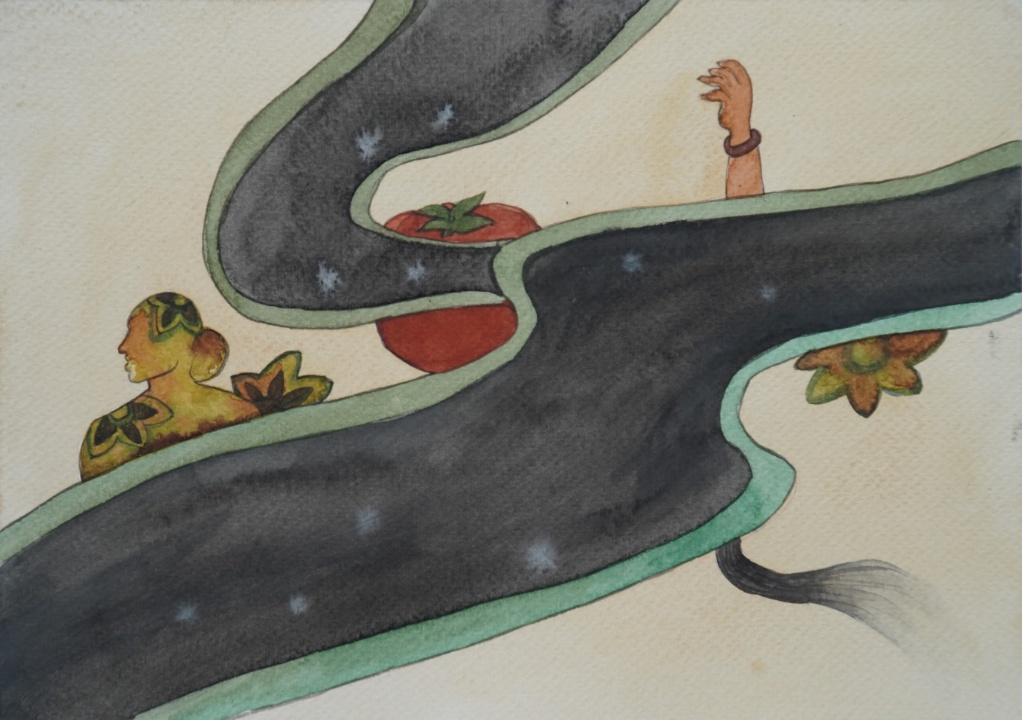
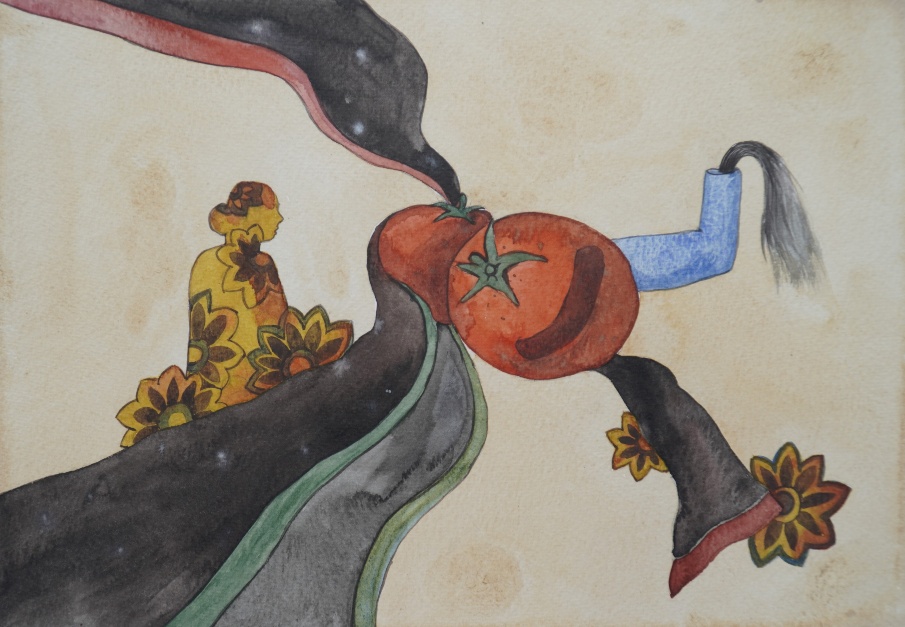
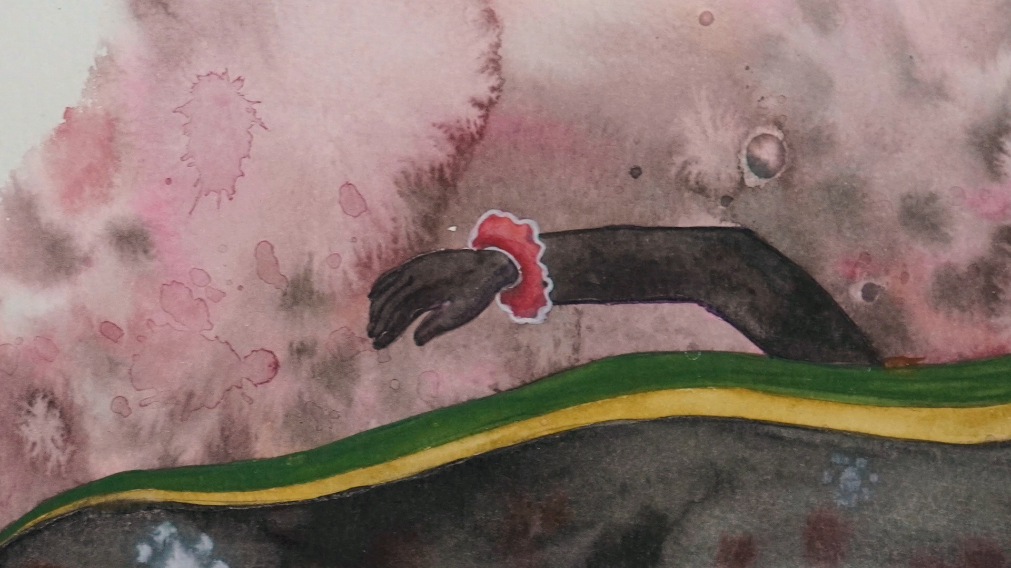
    Untitled-6 (i), watercolour and acrylic gold on paper, 15 x 11 inches, 2024. A surreal, map-like composition in which a dark winding road or river-form carries star-like flecks. A red tomato sits in the road; a woman's arm with a bracelet reaches up from one side; a leafy face or head emerges from another.
    Untitled-6 (ii), watercolour and acrylic gold on paper, 15 x 11 inches, 2024. A dark road-form curves and collides with a large, vivid tomato at the picture's centre. A small figure in yellow and brown sits to the left; a blue pipe emits smoke or hair to the right.

    Untitled-7, watercolour and acrylic gold on paper, 11 × 15 inches, 2024

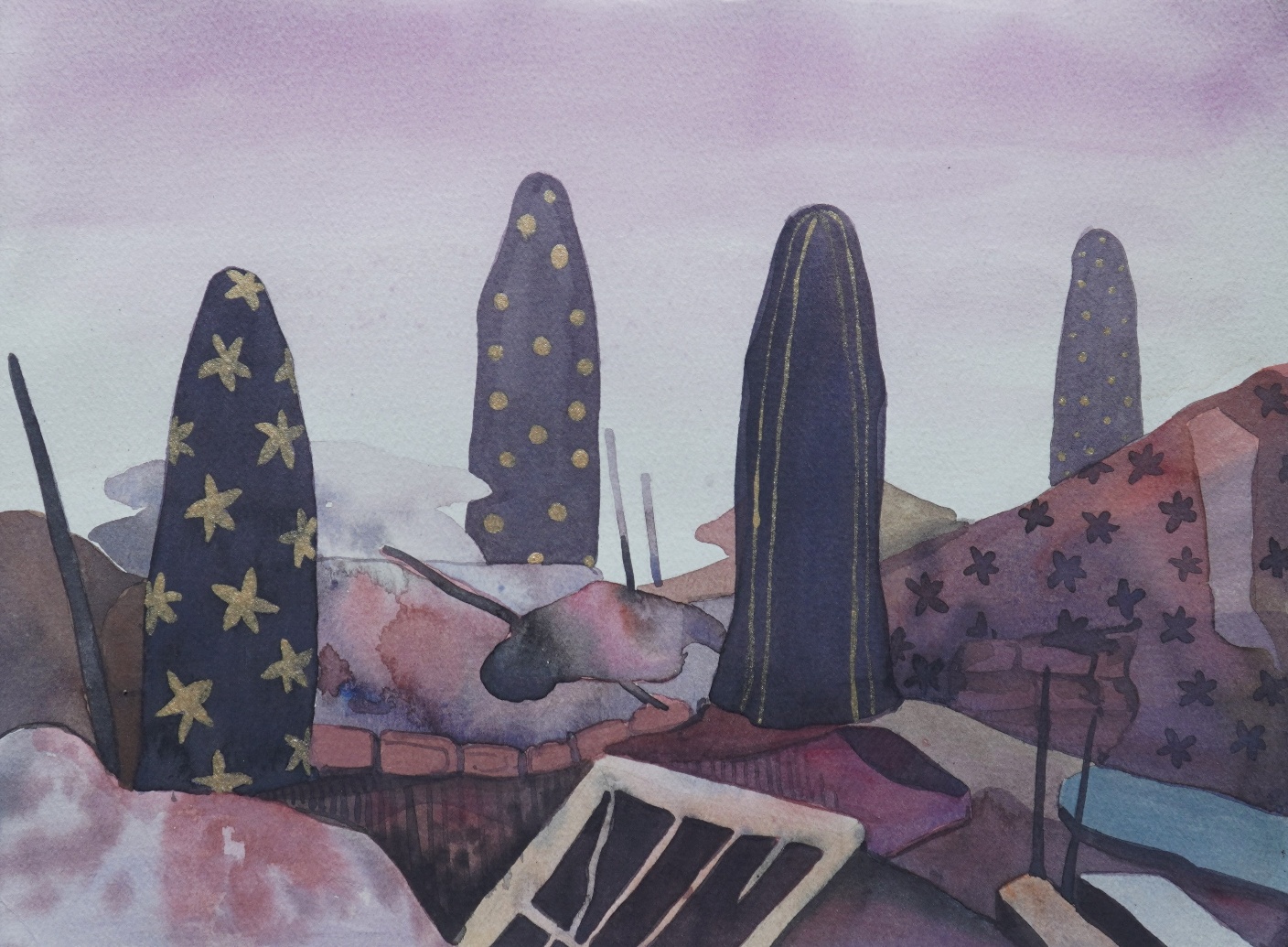
    Untitled-7, watercolour and acrylic gold on paper, 11 x 15 inches, 2024. A landscape of tall, narrow obelisk-like forms — some patterned with gold stars, others plain dark or polka-dotted — rise from a rubble-strewn, violet-pink ground beneath a hazy dusky sky. The work reads as both ruin and monument: an elegiac, futurist vision of what stands after destruction.
  • The Sky in the house

    The Sky in the house

    Virtual reality film (ongoing)
    Final film: approx. 10–12 minutes with interactive museum game

  • Dream Your Museum

    Dream Your Museum

    Berlin Biennale for Contemporary art 2022, Berlin, Germany

    ( Film and Installation )

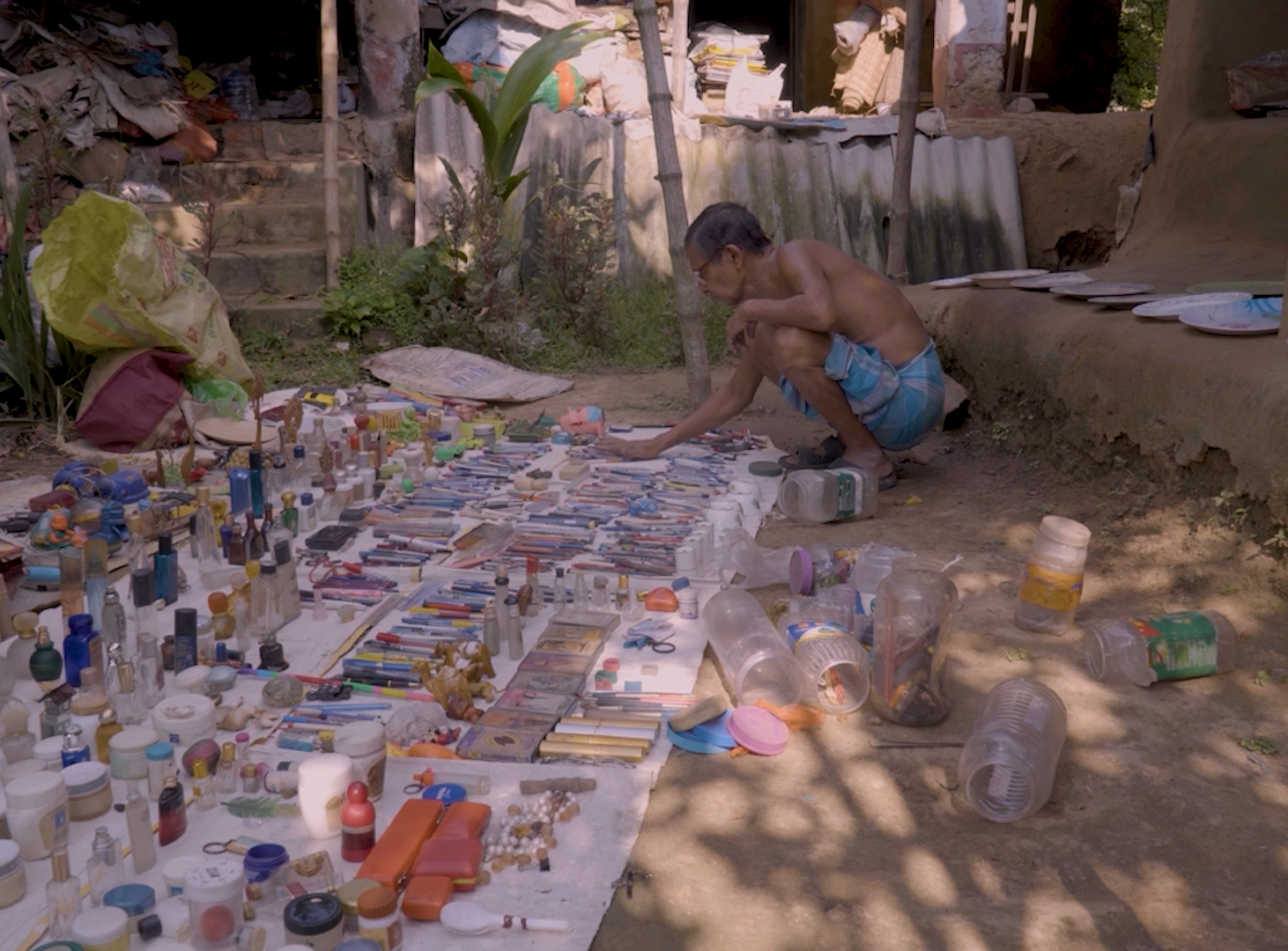
    Khandakar Ohida possesses a sensibility informed by the socio-political hierarchies that shape vernacular identities. In DREAM YOUR MUSEUM (2022), she inquires into the conditions of capital, class privilege, and the persistence of colonial frameworks that exclude certain bodies from participating in official archival spaces. The artist draws on the story of her uncle, Khandakar Selim, a compulsive hoarder who has amassed a vast number of items in his home over forty-seven years. The artist’s installation is a condensed recreation of his collection, which proposes a museum of memorabilia. However, a few questions arise: Can a book of stamps coexist with vintage alcohol bottles? Do jars of nails or ordinary plastic bags count as permissible artifacts for a museum? What does the cohabitation of holy books in a precarious space of care say about a country reeling under sectarian angst?

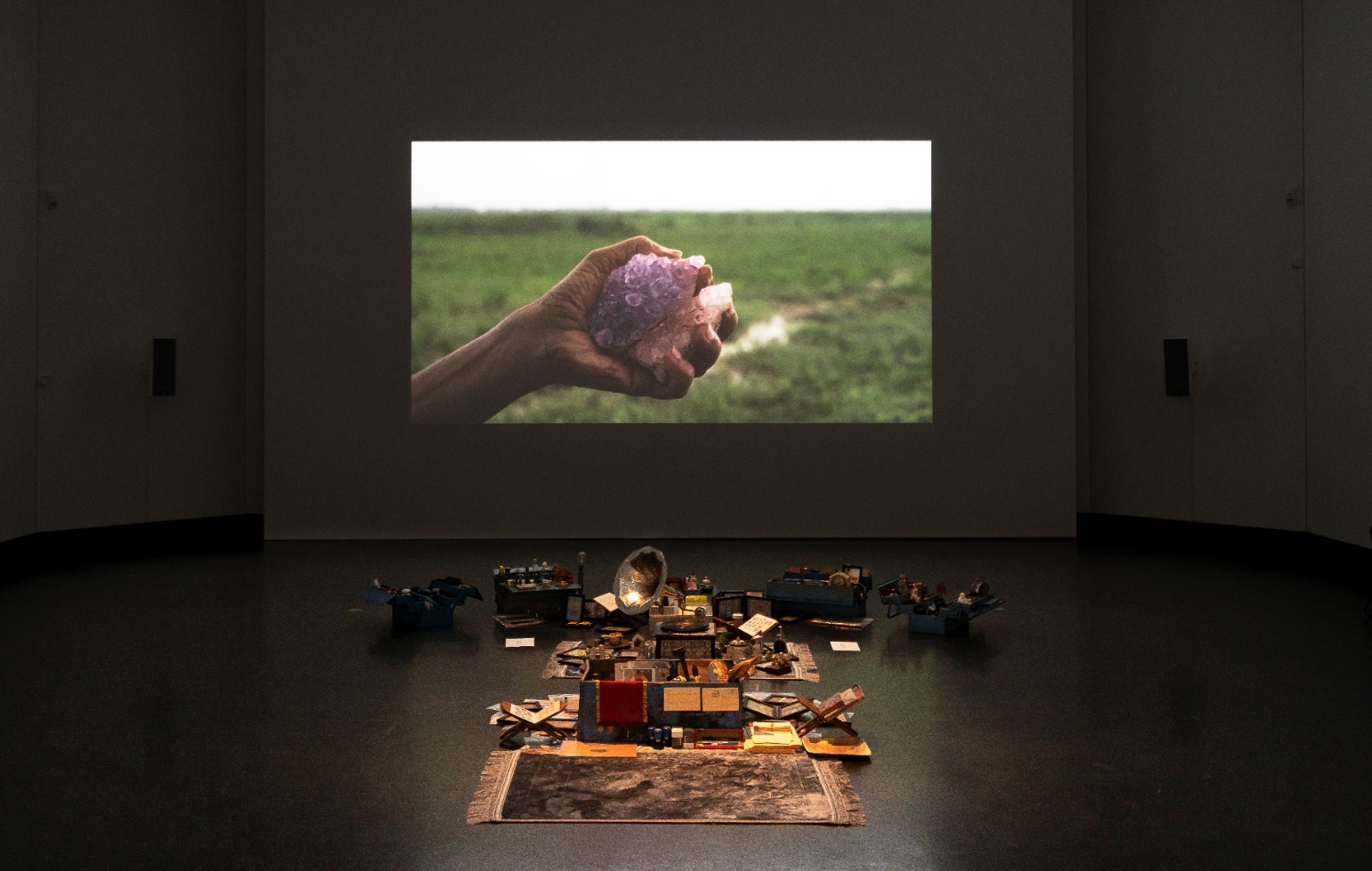
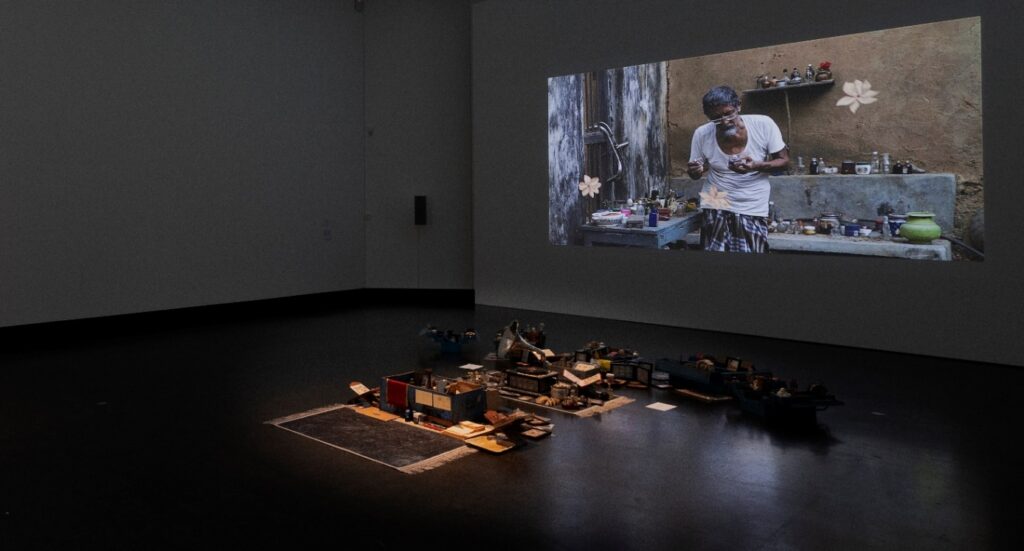
    Installation view of Dream Your Museum at Akademie der Kunste, Berlin, 2022. The film is projected on the wall — showing Khandakar Selim at work in his home, surrounded by his accumulated objects — while the installation of trunks and collected items is displayed on the floor below. Photo credit: Dotgain.info, Berlin Biennale.
    Display at Akademi der Kunste, Pariser Platz, Berlin

    Far removed from the nationalistic impulse that shapes institutional sites, Selim has made use of metal trunks as containers for his domestic museum. Found in most middle-class South Asian households, they are ubiquitous as long-term storage solutions. However, the premise of organization is discarded here in favour of a nonlinear relationship with time, as the objects jump across contexts and are accorded uniform value. In its naïve genesis, this portable museum unwittingly defies the authority, surveillance, and tactile prohibitions of conventional museums. Viewers are invited to leisurely peruse the items in Selim’s boxes, which reveal the childlike curiosity of a demure man on the margins, who dared to dream.

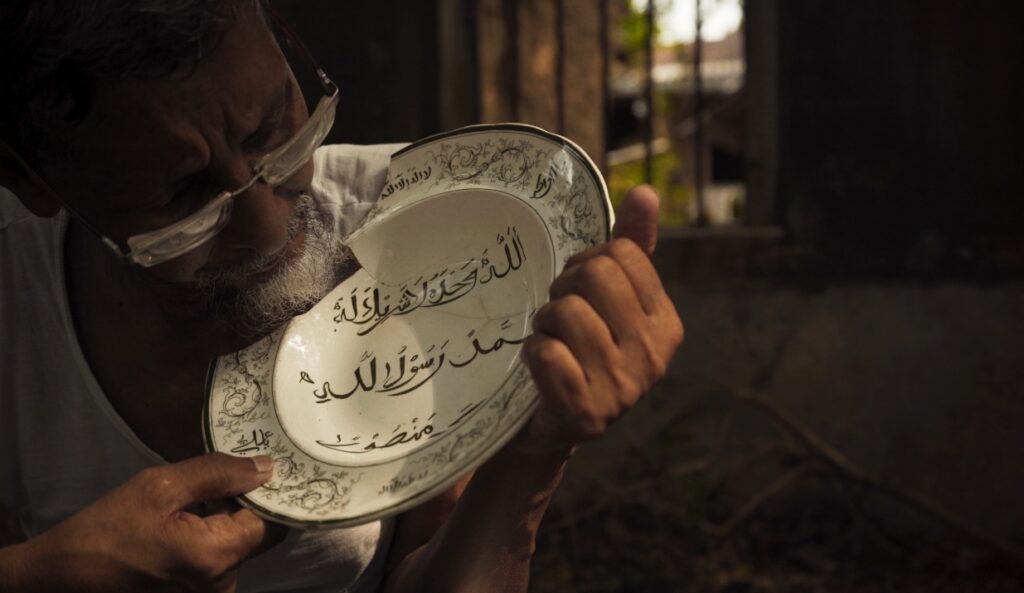
    Film still from Dream Your Museum, 2022. Photo credit: Anand Kumar Ekbote.
    Film still: Dream Your Museum, 2022

    DREAM YOUR MUSEUM delves into the tension between postcolonial imaginaries of preservation and the micro-universe of a Muslim inhabitant of rural India. A conversation between two figures in the short film that completes the installation establishes a dreamscape with the items on display — animated by the vivid imagination of an accumulator.

    (Curatorial text: Berlin Biennale, Najrin Islam, 2022)

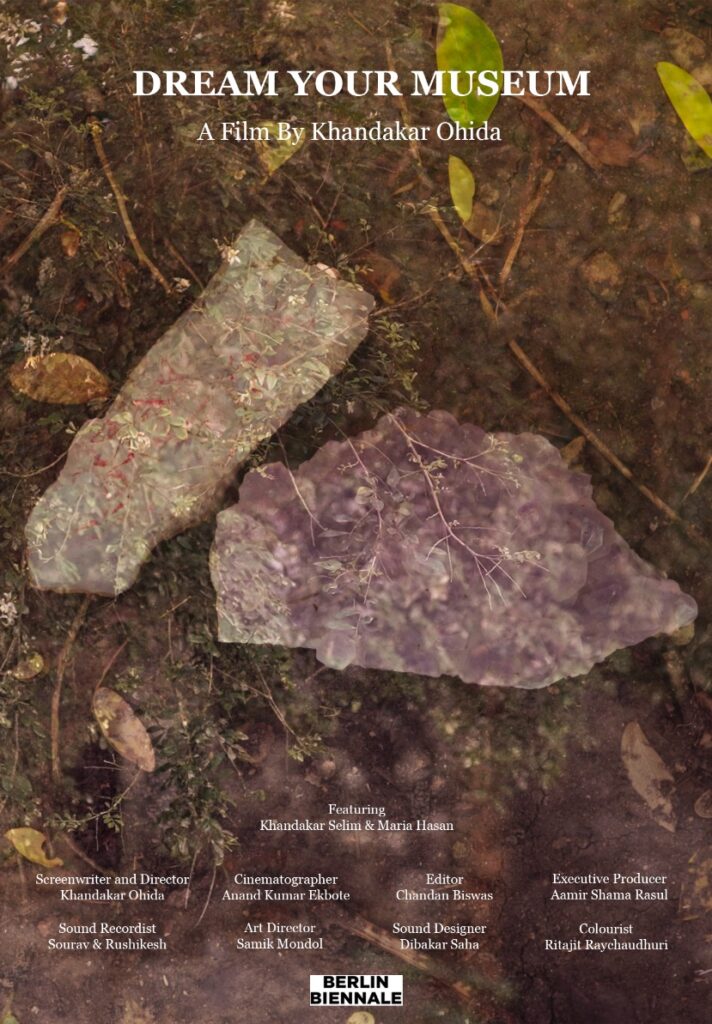
    Film poster for Dream Your Museum (2022), a film by Khandakar Ohida. The poster features two stones resting on dark, earthy ground, with the film title and credits listed above. The Berlin Biennale logo appears at the bottom. Duration: 18 minutes 15 seconds, colour, sound.
    Film poster
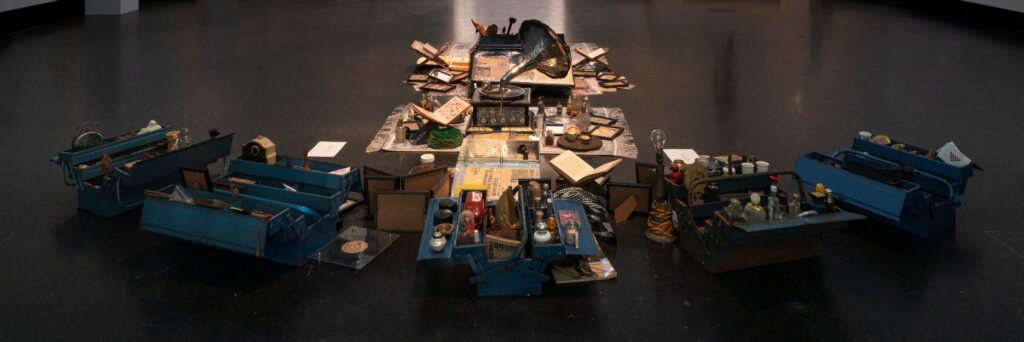
    Full panoramic view of the Dream Your Museum installation at Akademie der Kunste, Berlin, 2022. All blue metal trunks are open and arranged symmetrically around a central spread of Khandakar Selim's collected objects displayed on the gallery floor. Photo credit: Dotgain.info, Berlin Biennale.
    At Akademi der Kunste, Pariser Platz, Berlin

    Details of the installation:

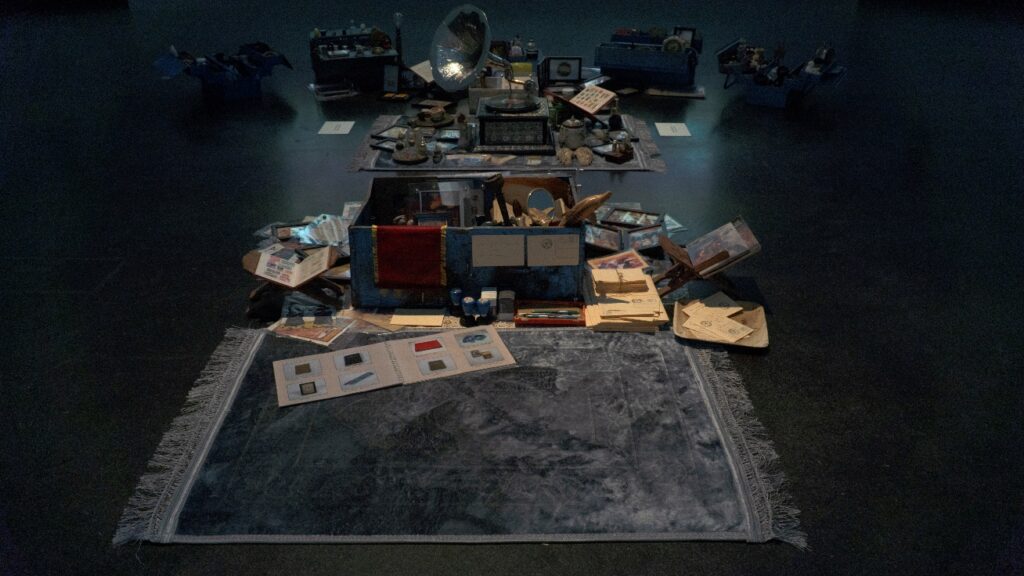
    Overhead installation view of Dream Your Museum at Akademie der Kunste, Berlin, 2022. The darkened gallery space shows the full arrangement of blue metal trunks and collected objects spread across sitting mats on the floor, with the film projection visible at the far end.
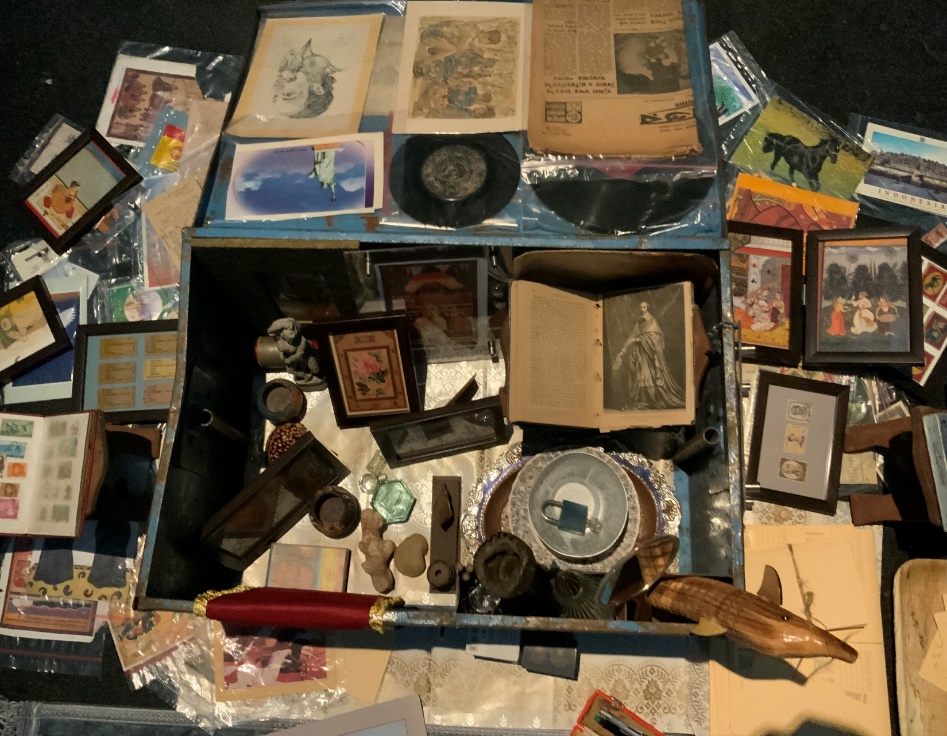
    Detail view of an open blue metal trunk in the Dream Your Museum installation, revealing a dense arrangement of eclectic objects: old photographs, printed images, small bottles, books, a vinyl record, a horse figurine, coins, stamps, and a large red pen — the contents of Selim's domestic archive.
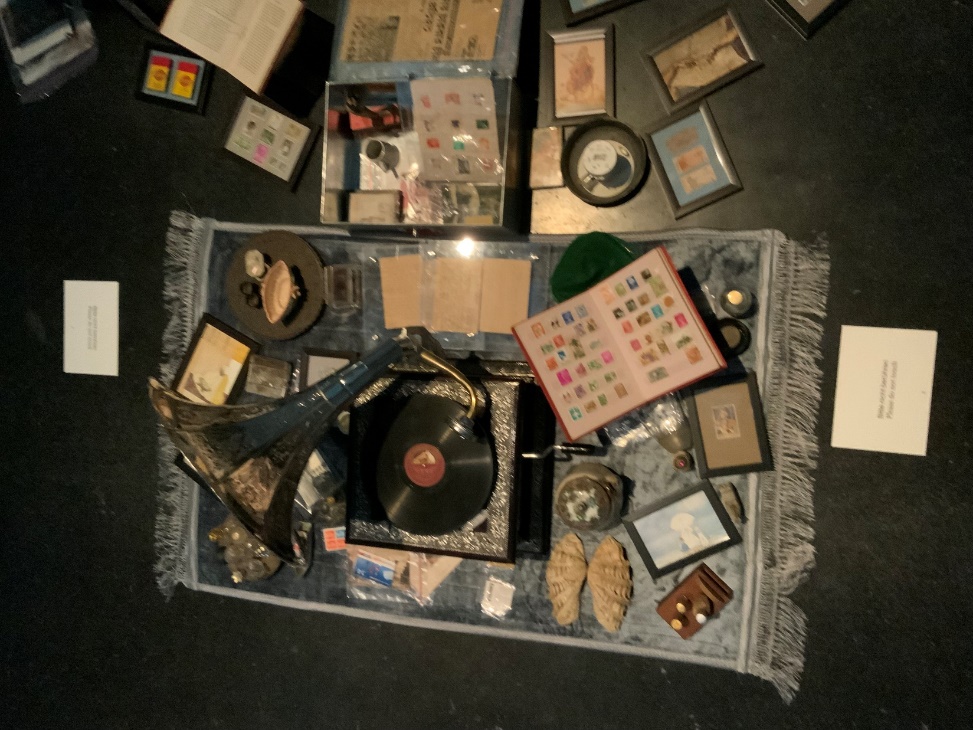
    Detail view of the Dream Your Museum installation — overhead close-up of objects displayed on a mat, including a gramophone record, stamp collection albums, coins, small framed prints, and other accumulated items from Khandakar Selim's domestic museum.
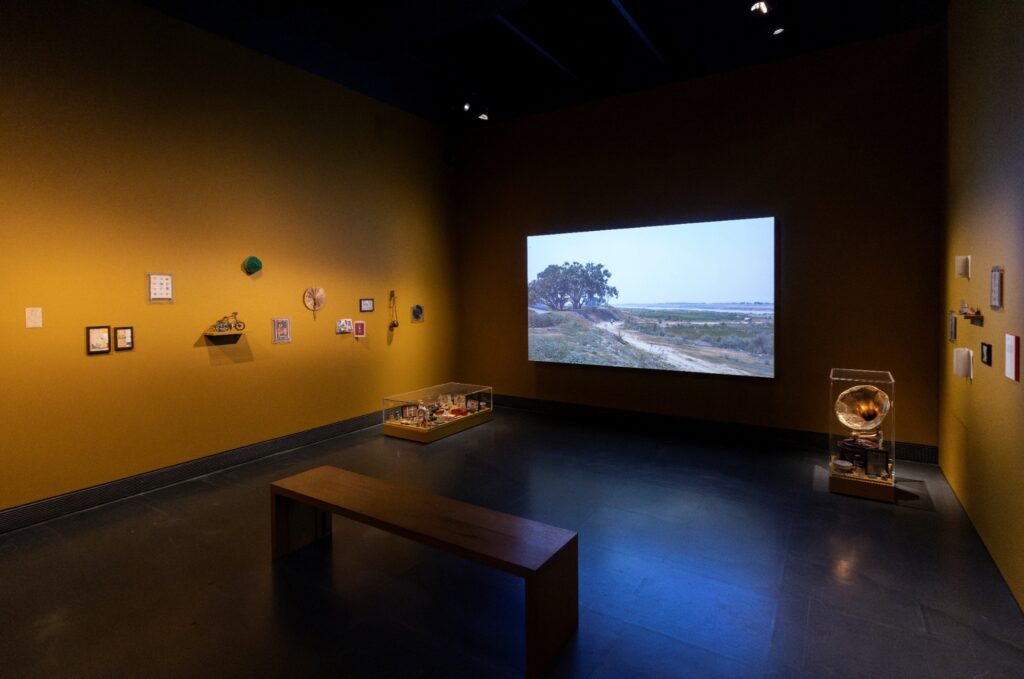
    Installation view of Dream Your Museum at the Jameel Prize 7 Exhibition, Victoria and Albert Museum, London, 2024. The work is installed in a warm amber-walled gallery: the film is projected on the rear wall showing a rural landscape with a tree and a dirt road, while framed objects and small works are mounted on the side walls and display cases are arranged on the gallery floor.
    Jameel Prize 7 exhibition display at V&A, South Kensington, London
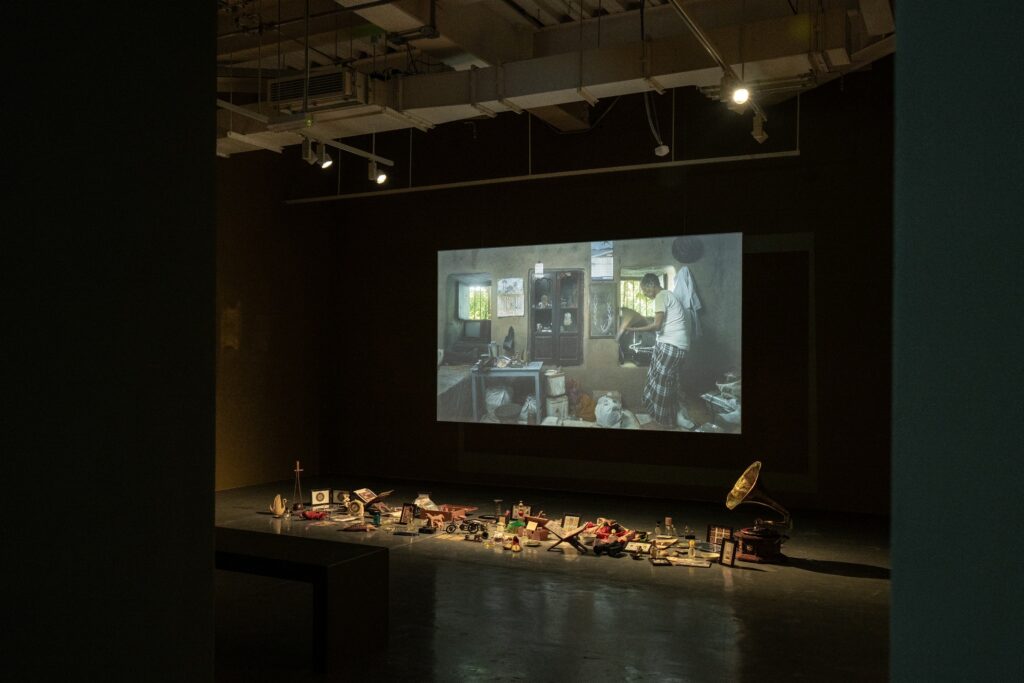
    Installation view of Dream Your Museum at Hayy Jameel, Jeddah, Saudi Arabia. The darkened gallery features the film projected on the rear wall — a scene of Khandakar Selim in his home surrounded by accumulated objects — with the metal trunks and collected items arranged on a raised platform in the foreground, and a gramophone visible to the right.
    Display view at Hayy Jameel, Jeddah, Saudi Arabia